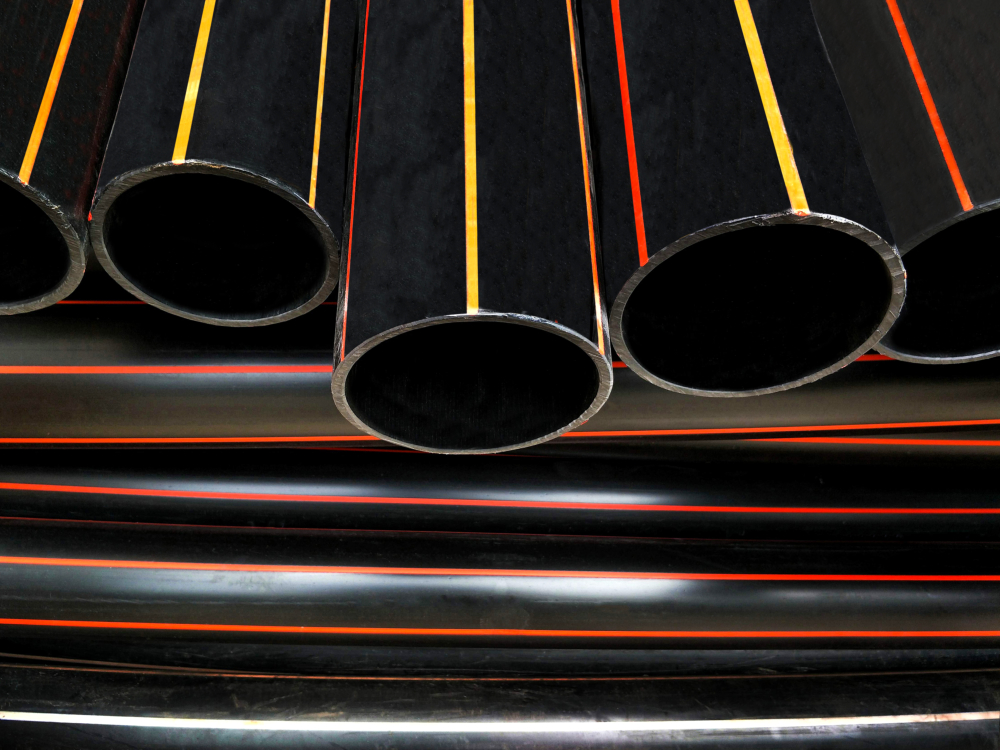
High-density polyethylene (HDPE) pipe is one of the most reliable piping materials available for transporting water, gas, and industrial fluids. Its strength, flexibility, and resistance to corrosion have made it a preferred choice over traditional piping systems in many applications. When selecting HDPE pipe for high-pressure conditions, one of the most important considerations is the wall thickness, typically identified by the dimension ratio (DR). Two of the most common classifications are DR7 and DR11, and the choice between them has significant implications for pressure performance, cost, and long-term durability.
DR7 Pipe Strength in Demanding Systems
DR7 pipe refers to HDPE manufactured with a dimension ratio of 7, meaning the outside diameter is seven times the minimum wall thickness. Due to its smaller DR value, DR7 has thicker walls compared to DR11 or higher DR classifications. This increased wall thickness provides a higher pressure rating, making DR7 suitable for demanding industrial systems and municipal water mains that operate under high stress.
According to ASTM D3035 and AWWA C906 standards, DR7 pipe is commonly used where maximum pressure capacity is needed. It is especially valuable in environments with significant surge potential, such as oil and gas gathering lines or high-volume potable water distribution systems. Its durability also ensures leak-free performance, even under aggressive operating conditions.
| Specification | DR7 Pipe | DR11 Pipe |
| Dimension Ratio | 7 | 11 |
| Wall Thickness | Thicker | Thinner |
| Pressure Capacity | Higher | Moderate |
| Material Cost | Higher | Lower |
| Weight | Heavier | Lighter |
HDPE Pipe Benefits for Modern Projects
HDPE pipe has become the standard for municipal and industrial applications due to its outstanding resistance to corrosion, chemicals, and biological growth. Compared to steel, copper, and ductile iron pipe sizes, HDPE offers easier installation, fewer potential leak points, and longer service life. The pipe is manufactured in a wide range of CTS sizes, DIP sizes, and SIDR sizes, making it adaptable for irrigation systems, mining, wastewater, and sewer lines.
Industry guidelines, including PPI TR-41, highlight that HDPE’s flexibility allows for unique installation methods such as pipe bursting, slip lining, and horizontal directional drilling (HDD). These techniques minimize excavation and reduce installation costs, while the fully restrained joints ensure leak-free operation in highly pressurized or environmentally sensitive systems.
Safe Potable Water with HDPE Solutions
Potable water systems rely on materials that meet the highest standards for safety and durability. HDPE pipe, marked with blue stripe identification, is widely approved for drinking water under AWWA C906. Its chemical resistance ensures water quality is maintained over decades of service, and its corrosion resistance eliminates the common issues associated with metal piping, such as scaling and internal buildup.
In municipal projects, DR7 pipe is often specified for potable water mains where high pressure and long distribution distances require superior strength. DR11 may be sufficient for smaller branch lines or areas with lower static pressure requirements, offering a balance between performance and cost efficiency.
Ductile Iron vs HDPE in Infrastructure
Ductile iron has historically been the standard for pressurized water and wastewater systems. Ductile iron pipe sizes are still widely used, but they present challenges in terms of weight, corrosion, and installation complexity. Unlike ductile iron pipe, HDPE provides outstanding corrosion resistance and is highly resistant to physical damage such as impact or ground movement.
While ductile iron requires protective coatings, cathodic protection, or linings to resist corrosion, HDPE does not. This reduces maintenance and ensures consistent flow over the pipeline’s service life. Comparisons between ductile iron and HDPE demonstrate how installation costs, maintenance, and long-term operating efficiency often favor high-pressure HDPE.
Reducing Operating Costs with Wall Thickness
Operating costs are a critical factor in evaluating piping materials for industrial and municipal applications. HDPE pipe, particularly in DR7 and DR11 classifications, significantly reduces costs related to maintenance, repair, and energy usage. The smooth interior surface reduces friction losses, lowering pumping energy requirements compared to rougher piping materials like ductile iron or steel.
The ability to install HDPE using trenchless methods also reduces project costs by minimizing excavation, labor, and site restoration. For long-term projects, reduced potential leak points and improved durability translate directly into lower life-cycle costs.
| Cost Consideration | DR7 Pipe | DR11 Pipe |
| Material Cost | Higher initial | Lower initial |
| Installation Costs | Moderate | Lower |
| Maintenance | Very low | Very low |
| Energy Efficiency | Excellent | Excellent |
HDPE for Municipal and Industrial Networks
Municipal and industrial applications demand piping materials that are suitable for varied environmental conditions and operational demands. HDPE has proven highly reliable in gas gathering, oil and gas distribution, industrial systems, and municipal potable water and wastewater systems. With proper selection of wall thickness, both DR7 and DR11 offer leak-free, highly resistant pipelines that perform under challenging conditions.
Industrial applications such as chemical processing or mining benefit from HDPE’s chemical resistance, while municipal systems rely on its durability and long service life. Identification stripes include blue for potable water, green for sewer, and purple for reclaimed water. These markings simplify system design and maintenance, reducing the risk of cross-connection.
Pressure Rating and Wall Thickness Insights
Pressure rating is directly tied to wall thickness in HDPE pipes. The lower the dimension ratio, the thicker the wall and the higher the pressure rating. ASTM and PPI guidelines provide exact formulas for determining minimum wall thickness and allowable working pressures. In general, DR7 pipe supports significantly higher pressure ratings than DR11 across the same nominal diameter.
| Nominal Pipe Size | DR7 Pressure Rating (psi) | DR11 Pressure Rating (psi) |
| 2 inch | 335 psi | 200 psi |
| 4 inch | 335 psi | 200 psi |
| 8 inch | 335 psi | 200 psi |
| 12 inch | 335 psi | 200 psi |
These ratings, taken from AWWA C906 specifications, highlight why DR7 is specified for high-pressure applications, while DR11 offers a cost-effective solution for moderate-pressure conditions.
High-Pressure Reliability of DR7 and DR11
High-pressure systems demand pipelines that are not only strong but also highly resistant to physical damage and environmental stresses. DR7 HDPE pipe, with its thicker walls, is an ideal choice for these scenarios. It performs exceptionally well in oil and gas gathering, natural gas distribution, and other industrial applications where surge pressures or fluctuating loads are common.
HDPE’s flexibility allows it to absorb pressure surges better than rigid piping materials such as steel or ductile iron. Combined with fusion-welded joints that create a fully restrained, leak-free pipeline, DR7 pipe ensures safety and reliability even in the most demanding environments. DR11 pipe remains a strong candidate for irrigation systems, sewer, and wastewater projects where the pressure demands are lower, but long-term performance is still required.
Coastal Resource Group for HDPE Supply Excellence
For industries across Texas and along the Gulf Coast, selecting the right supplier for HDPE pipe and fittings is as important as selecting the correct dimension ratio. Coastal Resource Group is a Texas-based industrial supply company specializing in HDPE pipe, fittings, fusion machine rentals, and industrial equipment. With rapid delivery and 24/7 availability, Coastal ensures that municipal and industrial projects never face costly delays waiting for materials.
- Fast Delivery: Supplies are shipped quickly from Texas to prevent project delays.
- Comprehensive Products: From HDPE pipe and fittings to valves, PPE, and welding equipment, everything is available in one place.
- 24/7 Availability: Sales representatives are always on call to handle urgent supply needs.
- Industry Coverage: Supporting oilfield operations in the Eagle Ford Shale, petrochemical plants, municipal water systems, and more.
- Proven Expertise: Technical knowledge and reliable inventory ensure the right materials for both DR7 high-pressure HDPE and DR11 municipal projects.
With a complete product range that includes rigging equipment, industrial consumables, and safety supplies, Coastal Resource Group has established itself as the one-stop partner for projects that cannot afford downtime.
Contact us today to request a quote and keep your operation running on schedule.