
Texas Industrial Supply Company

316 stainless steel pipe is a strong and corrosion-resistant pipe made from a type of stainless steel that contains molybdenum. This makes it more resistant to chemicals, saltwater, and harsh environments compared to other stainless steels. It’s a popular choice for marine, chemical, and food processing industries.
Learn more about different types of stainless steel on our Stainless Steel Products page.

Key Features and Benefits of 316 Stainless Steel Pipe

316 stainless steel pipes offer many useful features, including:
  • Excellent resistance to corrosion, especially from salt and acidic chemicals
  • High strength and durability under extreme temperatures
  • Easy to clean and maintain, making it ideal for sanitary uses
  • Long lifespan, reducing replacement and repair costs
  • Attractive finish, suitable for both industrial and decorative use
Another major benefit of 316 stainless steel is its versatility in fabrication. It can be welded, bent, and formed into various shapes without losing strength or performance. This flexibility makes it an ideal material for custom piping systems, especially in projects that require precision and durability.

Call Us: 888-841-7954

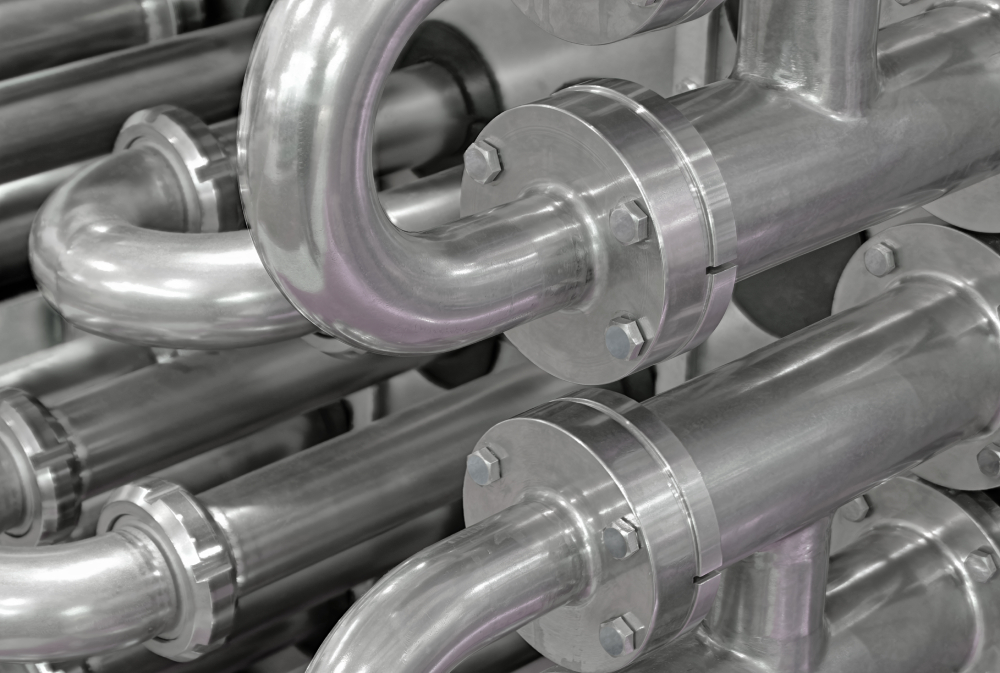
HDPE and stainless steel pipes displayed for industrial supply
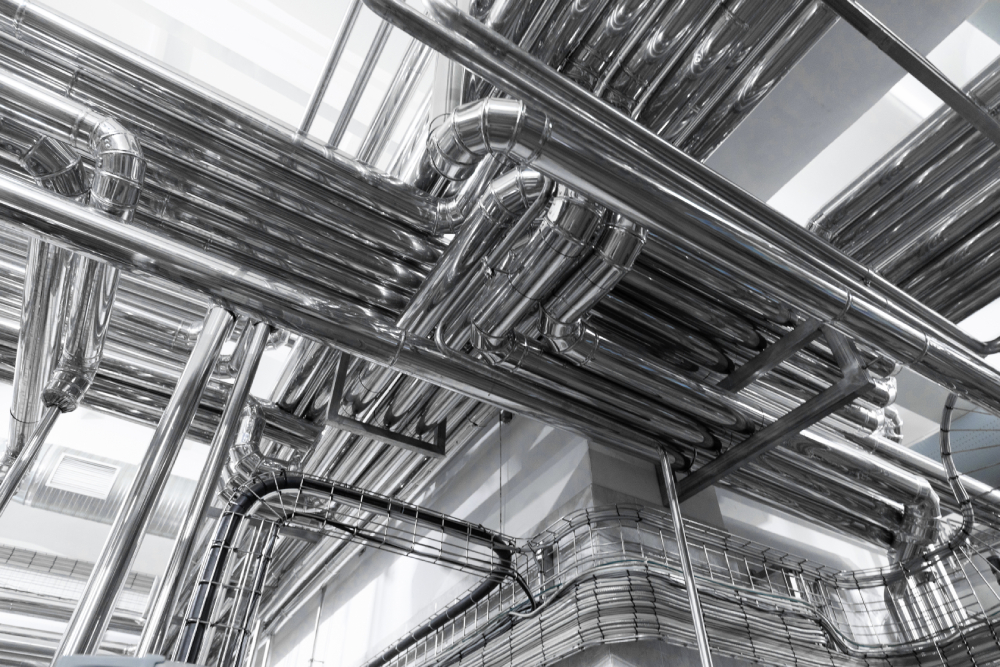
Industrial use of 316 stainless steel pipes in a chemical plant

Common Uses of 316 Stainless Steel Pipes

You can find 316 stainless steel pipes used in many industries, such as:
  • Marine environments – boats, docks, and underwater systems
  • Chemical processing plants – transporting chemicals and acids
  • Food and beverage industry – used in equipment for sanitary reasons
  • Pharmaceutical production – clean, sterile piping
  • Construction and architecture – structural components and railings
316 stainless steel pipes are also widely used in wastewater treatment facilities. Their high resistance to corrosion from chlorides, chemicals, and contaminated water makes them ideal for pipelines, tanks, and filtration systems. The pipes help maintain clean water flow while minimizing long-term damage and repair needs.
In the automotive and aerospace industries, 316 stainless steel is used in exhaust systems, heat exchangers, and hydraulic tubing. The metal’s ability to withstand extreme heat, pressure, and vibration makes it suitable for demanding performance applications where safety and durability are critical.

Technical Specifications of 316 Stainless Steel Pipe

Here are some standard specs for 316 stainless steel pipe:
Specification Details
Chemical Composition Contains chromium (16–18%), nickel (10–14%), and molybdenum (2–3%)
Tensile Strength About 515 MPa (75,000 psi)
Melting Point 2,500°F (1,371°C)
Standards Meets ASTM A312, A269, and A213
316 stainless steel pipes are made with a precise chemical balance that boosts their corrosion resistance and durability. The added molybdenum is especially important for protecting against salt and harsh chemicals, making this grade more reliable than other stainless steels in extreme conditions.
The mechanical strength and high heat resistance of 316 pipes make them ideal for pressure systems and structural support. They perform well under heavy loads and in high-temperature environments, ensuring long-term stability and performance for both industrial and commercial applications.

Why Choose 316 Stainless Steel Pipe Over 304?

While both 316 and 304 stainless steel pipes are strong and corrosion-resistant, 316 offers better protection in harsh conditions. The key difference is the added molybdenum in 316, which improves resistance to chlorides (like seawater and de-icing salts). This makes 316 better for outdoor, coastal, and industrial applications.
Explore more stainless steel options here.

Sizes Available and Custom Orders

We offer 316 stainless steel pipes in many standard sizes and thicknesses. Custom sizes and lengths are also available to match your specific project needs. Whether you need one pipe or a bulk order, we can help you find the right fit.
We also offer HDPE pipes for specialized applications.

Call Us: 888-841-7954

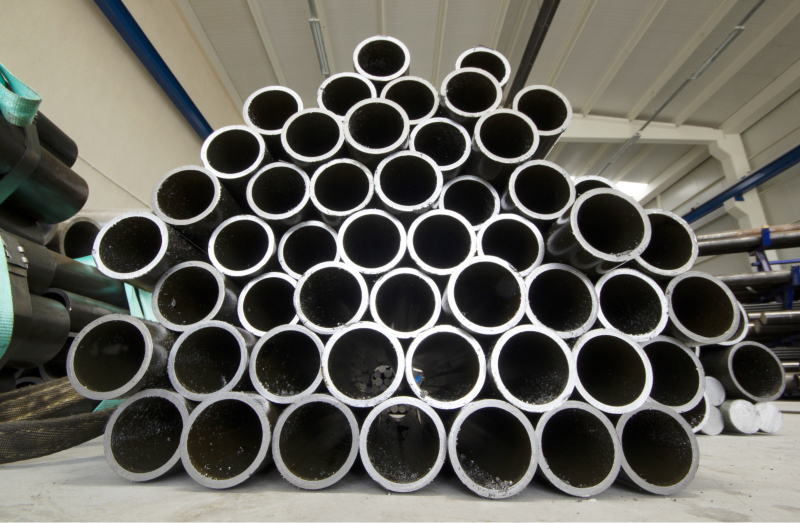
steel pipes in the factory

What are the Disadvantages of 316 Stainless Steel?

Although 316 stainless steel is high-quality, it has a few downsides:
  • Higher cost than 304 stainless steel
  • Not as strong at high temperatures compared to other alloys
  • Can still corrode in highly acidic or concentrated chloride environments

Is 316 Stainless Steel Waterproof? Is It Good for Water Use?

316 stainless steel is not completely waterproof, but it is highly water-resistant. It performs very well in wet and marine conditions. It’s commonly used for plumbing, boats, and underwater structures because it resists rust and corrosion even in saltwater.

Call Us: 888-841-7954

What are the Three Main Grades of Steel Pipes?

The three most common grades of steel pipe are:
  • 304 Stainless Steel – affordable and corrosion-resistant, used in general applications
  • 316 Stainless Steel – stronger resistance to chemicals and saltwater
  • Carbon Steel – very strong and used in high-pressure systems but prone to rust without coating

To see more materials for piping, check out our HDPE pipe options.

Final Thoughts on Choosing 316 Stainless Steel Pipe

316 stainless steel pipe is a strong, corrosion-resistant option for both industrial and commercial use. It’s ideal for harsh or sanitary environments like marine, chemical, and food applications. Still deciding? Check out our Stainless Steel and HDPE Pipes pages or contact us for more details.