
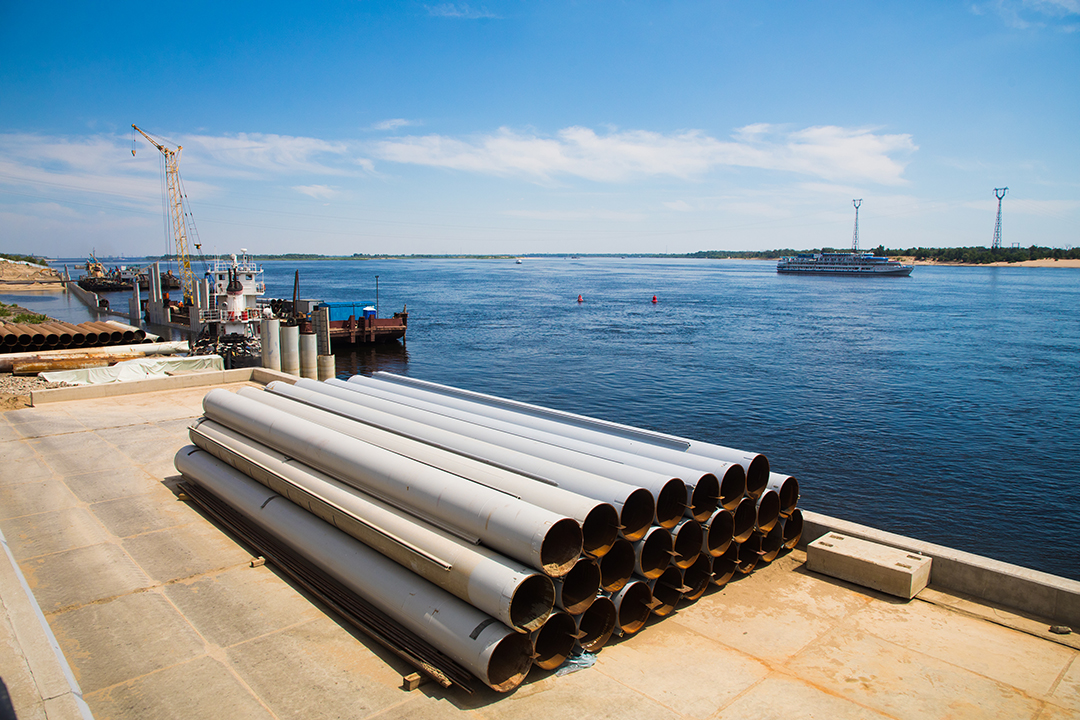
Coastal and marine infrastructure projects face some of the harshest operating conditions in the construction industry. Saltwater exposure, constant movement, and chemical corrosion push traditional materials to their limits. Modern engineering solutions rely on marine HDPE systems because they provide durability, flexibility, and resistance to environmental stressors. As ports, desalination plants, and coastal drainage networks expand worldwide, contractors are increasingly turning to HDPE as the material that delivers long-term reliability and sustainability in demanding environments.
Engineering Demands of Coastal and Marine Infrastructure
Marine construction projects involve continuous exposure to saline water, ultraviolet radiation, and shifting tides. These conditions quickly degrade materials such as steel, ductile iron, and concrete. The U.S. Environmental Protection Agency (EPA) notes that corrosion is one of the leading causes of infrastructure degradation in marine environments, often resulting in substantial maintenance costs and downtime. Unlike metallic materials, HDPE does not rust, pit, or corrode, making it a practical long-term solution for coastal systems.
HDPE’s inherent flexibility also allows it to withstand wave movement, seabed settlement, and the thermal expansion that occurs along exposed coastal lines. These performance advantages align with ASTM F714 standards for polyethylene (PE) pressure pipe applications and ISO 21307 fusion procedures, ensuring safe, leak-free performance in both submerged and shoreline installations.
Advancements Defining Modern Marine HDPE Standards
HDPE technology has matured into a dependable standard for marine and coastal infrastructure. Developments in material formulation, such as PE4710 and PE100, represent continuous improvement in strength, flexibility, and chemical stability rather than new inventions. These established grades enable pipelines to handle high-pressure saltwater transport with reduced weight and improved longevity, aligning with recognized benchmarks such as ASTM F714 and ISO 4427.
Marine infrastructure increasingly depends on these standard materials to ensure predictable performance and long-term reliability. From desalination intake lines to dredging systems and outfall networks, DR11 and DR17 configurations remain the go-to options for contractors aiming to meet safety, efficiency, and compliance expectations in saltwater environments.
Design Considerations in Coastal Piping Systems
Designing an effective coastal piping system requires a balance of flow efficiency, pipe stiffness, and external loads. Marine installations are often faced with dynamic seabed conditions, so engineers must account for both hydraulic and structural behavior. The SDR rating defines the wall thickness relative to the pipe’s outer diameter, directly impacting performance under internal pressure and external forces.
| SDR Rating | Pressure Class (psi) | Common Marine Applications |
|---|---|---|
| DR7 | 250 | High-pressure desalination lines and intake systems |
| DR11 | 160 | Saltwater distribution and dredging discharge |
| DR17 | 100 | Low-pressure coastal drainage and outfall systems |
Choosing the appropriate SDR ensures the pipeline can sustain both static and dynamic loading while optimizing cost and performance. Engineers frequently consult resources such as EPA coastal construction guidance and ASTM marine piping standards to ensure compliance with safety and environmental expectations.
Saltwater Pipe Solutions and Corrosion Resistance
Corrosion is the single largest threat to marine piping systems. Metallic and concrete pipelines degrade over time due to saltwater exposure, microbial growth, and electrochemical reactions. HDPE, being chemically inert, resists these forms of attack and retains its mechanical properties over decades. According to EPA water infrastructure studies, corrosion-related failures cost U.S. utilities billions annually, underscoring the importance of corrosion-resistant materials like HDPE in marine construction.
In comparison to steel and ductile iron, HDPE’s non-reactive surface prevents biofouling and mineral scaling, which are common in submerged applications. Testing according to HDPE pipe compliance standards confirms that marine-grade HDPE systems maintain consistent performance even under prolonged exposure to saltwater and ultraviolet radiation. These saltwater pipe solutions provide measurable advantages in lifecycle cost, reliability, and environmental safety.
Installation and Fusion Techniques in Marine Environments
Marine pipeline installation presents unique challenges that require specialized fusion and handling methods. HDPE’s lightweight nature makes it ideal for float-and-sink installation, where fused pipe strings are welded onshore and towed to the installation site. Once positioned, the line is filled with water to submerge it gradually along the prepared trench or seabed route. This approach minimizes offshore welding operations and reduces installation time significantly.
Fusion quality is critical to performance. Contractors rely on fusion rental equipment and trained personnel to perform butt fusion or electrofusion in accordance with ASTM F2620. The process ensures that each joint becomes as strong as the pipe itself, preventing leaks and extending service life. Proper handling procedures also include the use of industrial welding supplies and equipment rated for marine environments to maintain consistent quality.
Sustainability and Long-Term Value of HDPE in Coastal Design
Sustainability has become a critical consideration in coastal construction. HDPE’s long service life, recyclability, and low environmental impact make it a key component in sustainable infrastructure development. The material’s smooth internal surface improves flow efficiency, reducing energy consumption in pump-driven marine systems. It also eliminates the need for internal coatings or chemical inhibitors, reducing potential contamination risks.
Studies referenced by the International Organization for Standardization (ISO) show that HDPE contributes to lowering greenhouse gas emissions compared to steel and concrete alternatives across the full lifecycle of a project. With strong alignment to global initiatives promoting sustainable coastal infrastructure, HDPE continues to drive innovation in environmentally responsible piping systems.
Coastal Resource Group Delivering Marine HDPE Supply Solutions
Successful coastal and marine infrastructure projects depend on reliable materials and responsive support. Coastal Resource Group supplies complete HDPE pipe systems and fusion services designed for saltwater environments. The company supports contractors and engineers with:
- Wide HDPE inventory, including DR11, DR17, and PE4710 grades, built for marine durability.
- Fusion rentals and welding equipment featuring expert technical guidance, support, and service reliability.
- Fast delivery from Houston and Seguin to keep projects on schedule.
- 24/7 support that ensures immediate response to critical marine construction needs.
With deep experience in coastal piping design and HDPE system integration, Coastal Resource Group helps contractors minimize downtime, maintain compliance, and achieve lasting performance in saltwater applications.
Contact us or request a quote to plan your next marine HDPE installation with confidence.