
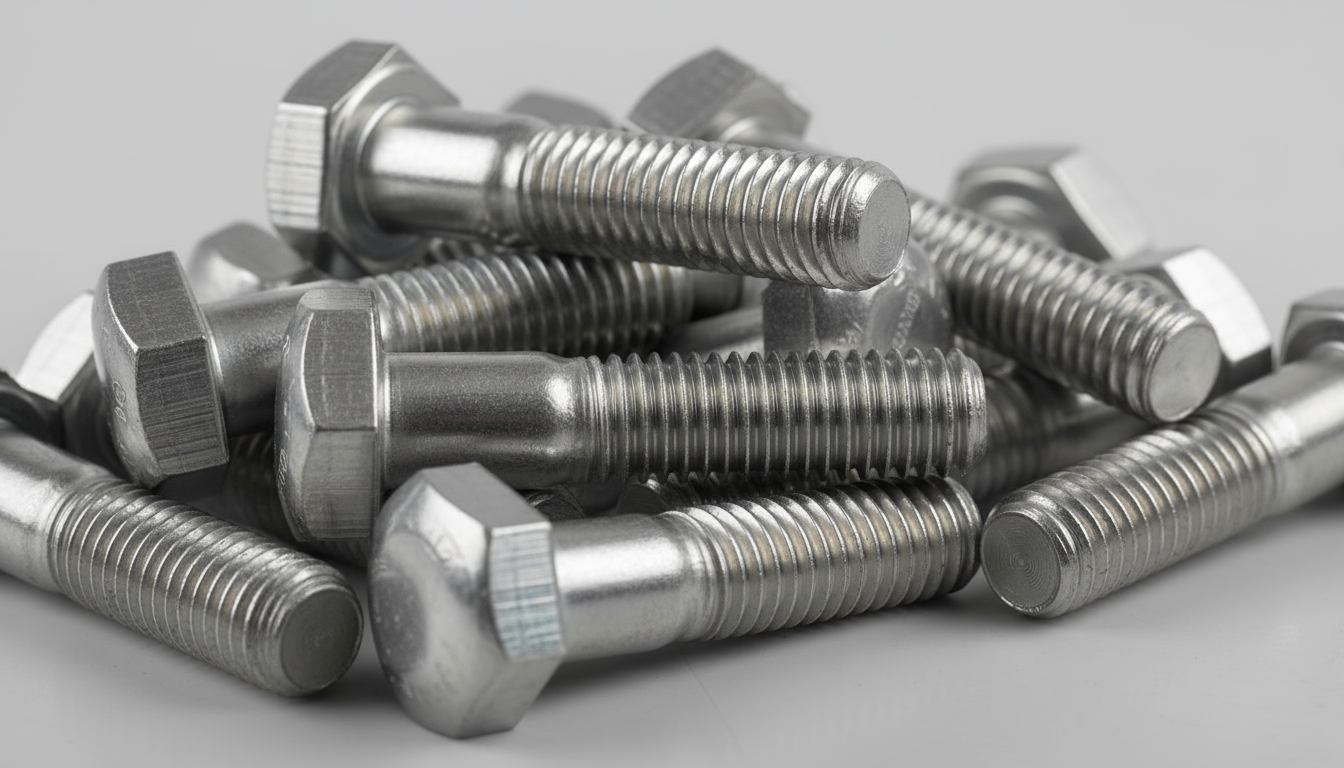
Construction and maintenance in coastal regions demand materials that can withstand constant exposure to salt, moisture, and corrosive air. Among fastening solutions, ASTM A193 B8 bolts stand out as reliable choices for coastal bolts and marine-grade fasteners. Engineered with stainless steel grades optimized for corrosion resistance, they offer consistent performance in offshore platforms, seawalls, shipyards, and marine infrastructure.
Stainless Steel Composition That Resists Saltwater Corrosion
ASTM A193 B8 bolts are produced from austenitic stainless steel, typically equivalent to Type 304. This alloy combines chromium and nickel, creating a passive oxide layer that prevents oxidation and rust. When used as saltwater-resistant bolts, this composition protects joints from chloride-induced corrosion found in marine environments.
The chromium content of about 18% improves surface passivation, while nickel adds ductility and toughness. These characteristics make B8 bolts suitable for 304 stainless steel applications where both strength and corrosion resistance are required. In harsher conditions, the B8M variant, which is equivalent to Type 316, contains molybdenum that enhances resistance to pitting and corrosion in chloride-rich areas.
Mechanical Strength and Long-Term Stability in Coastal Structures
Marine environments expose fasteners to continuous stress from cyclic loading, temperature changes, and chemical contact. ASTM A193 B8 bolts maintain mechanical integrity under these demanding conditions. With a minimum tensile strength of 75 ksi in standard form, they serve as dependable structural bolts in load-bearing frames, anchors, and flange connections subject to wave impact and vibration.
Each fastener undergoes solution annealing to remove internal stresses and refine the grain structure. This process ensures long-term dimensional stability, which is vital for projects such as piers, docks, desalination facilities, and industrial waterfront operations where durability and alignment are critical.
Advantages of ASTM A193 B8 Bolts in Marine Engineering
Contractors and engineers value ASTM A193 B8 bolts because they combine corrosion protection, strength, and maintainability in one product. Key advantages include:
- Excellent corrosion resistance: The stainless alloy’s passive film minimizes rust even under high humidity and salt exposure.
- Compatibility with marine coatings: Works effectively with epoxy and zinc-based coatings used in coastal structures.
- High temperature performance: Retains mechanical strength in thermal expansion zones of power plants or ship machinery.
- Low maintenance: Extends replacement intervals compared to carbon steel fasteners that degrade quickly in marine air.
- Long service life: Demonstrated durability of 15–25 years or longer, depending on environmental severity and maintenance cycles.
When compared to conventional alloys, B8 bolts provide an unmatched combination of reliability and longevity. Their use across industrial and petrochemical sectors near the coast underscores their reputation as dependable marine-grade fasteners.
Common Applications Across Marine and Coastal Projects
From port infrastructure to offshore energy systems, B8 fasteners are critical to maintaining structural stability in harsh marine settings. Typical applications include:
- Anchoring and flange assembly in marine pipelines and offshore platforms
- Structural framing of coastal facilities and seawalls
- Mounting of equipment in desalination and wastewater treatment plants
- Bolting connections in shipbuilding and dock repair operations
- Corrosion-resistant joints in stainless steel systems and fluid handling units
All of these applications require fasteners that can withstand saltwater exposure, temperature changes, and constant vibration. ASTM A193 B8 bolts are engineered to meet these demands, ensuring long-term reliability and performance in marine and coastal projects.
Performance Comparison with Conventional Fasteners
In coastal construction, using inappropriate fasteners can lead to early failures and costly downtime. The following table outlines how B8 bolts compare with other commonly used materials:
| Property | Carbon Steel Bolts | ASTM A193 B8 Bolts |
| Corrosion Resistance | Low in marine environments | High due to chromium oxide film |
| Service Life | 3–5 years (average) | 15–25 years or more |
| Maintenance Frequency | Frequent replacement | Minimal with periodic inspection |
| Temperature Resistance | Limited under heat | Excellent up to 870°F (465°C) |
| Initial Cost | Low | Moderate but offset by lifespan |
While carbon steel options may offer lower upfront costs, the superior corrosion resistance of ASTM A193 B8 bolts significantly reduces lifetime expenses associated with replacement and structural repair.
Factors Affecting Bolt Selection in Marine Conditions
Choosing the right coastal bolts involves evaluating multiple environmental and design considerations. Key factors include:
- Saltwater exposure: Constant immersion or spray demands stainless steel with molybdenum reinforcement, such as B8M.
- Temperature fluctuations: Select bolts with certified tensile and yield ratings suitable for expansion and contraction cycles.
- Joint accessibility: In underwater or restricted areas, bolts requiring minimal maintenance reduce labor costs.
- Mechanical loading: Evaluate static and dynamic forces to match bolt grade and threading type to the structure’s requirements.
- Compatibility with dissimilar metals: Prevent galvanic corrosion by pairing fasteners with compatible materials and isolators.
Marine engineers often specify ASTM A193 B8 or B8M bolts based on these parameters, ensuring long-term reliability across diverse marine installations.
Quality Standards and Compliance Requirements
ASTM A193 sets precise criteria covering chemical composition, mechanical properties, and heat treatment. Compliance ensures fasteners meet performance expectations in extreme environments. Many manufacturers also produce B8 bolts under A193 certification with traceable batch testing for mechanical and metallurgical consistency.
Contractors should verify that suppliers maintain proper certifications and documentation, including mill test reports (MTRs). These records confirm compliance with ASTM and ASME standards used in coastal and offshore construction.
Maintenance Practices That Extend Bolt Lifespan
Even the most corrosion-resistant alloys benefit from proper maintenance. To maximize the service life of marine-grade fasteners, contractors should implement the following practices:
- Inspect bolts periodically for pitting or discoloration, especially in submerged areas.
- Apply compatible anti-seize compounds during installation to prevent galling.
- Use washers and gaskets that isolate the fastener from dissimilar metals.
- Clean surfaces using non-chloride solutions to preserve passivation.
- Reapply protective coatings or sealants in exposed regions as part of scheduled maintenance.
Consistent upkeep, combined with appropriate material selection, helps maintain the structural reliability of coastal installations.
How Coastal Resource Group Supports Marine and Coastal Projects
Coastal Resource Group supplies high-quality materials and fastening solutions for marine and coastal environments. The company provides ASTM A193 B8 bolts, stainless steel fasteners, and industrial flange bolts built to withstand saltwater exposure and demanding field conditions.
- Certified inventory: Traceable A193 B8 and B8M bolts with full mill test documentation.
- Technical support: Guidance on material selection based on load, salinity, and exposure.
- Reliable logistics: Fast supply and delivery for critical operations.
- Comprehensive sourcing: Access to carbon steel, stainless, and specialty alloys.
- 24/7 availability: Round-the-clock service for contractors and engineers.
Coastal Resource Group stocks bulk B8 bolts built for saltwater exposure and offshore job sites. Certified inventory, full MTR documentation, and same-day fulfillment support marine operations that cannot afford delays. Request a quote to get the right products on time.