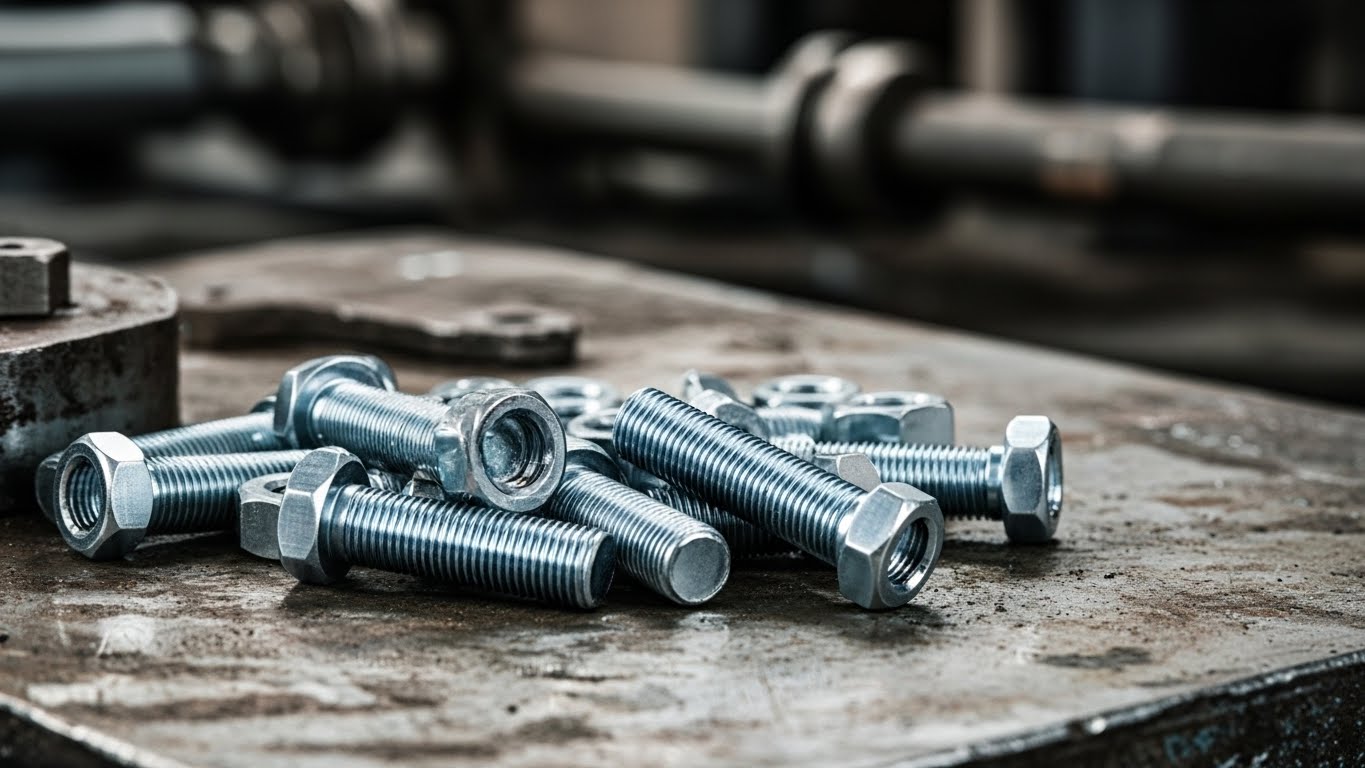
ASTM A193 Grade B8 bolts play a critical role in industrial infrastructure where fasteners must withstand high temperatures, moisture exposure, corrosive chemicals, and continuous mechanical stress. Manufactured from 304 and 304L austenitic stainless steel, B8 bolts offer strong corrosion resistance and reliable strength across petrochemical facilities, offshore platforms, power plants, and water treatment operations. Their performance advantages are obvious in demanding environments, as shown in the benefits of ASTM A193 B8 bolts in coastal and marine settings. However, despite their advanced metallurgy, long-term performance depends heavily on proper maintenance practices. Strategic inspection, lubrication, corrosion control, and replacement protocols ensure these fasteners maintain integrity throughout their service life.
Understanding B8 Bolt Properties and Environmental Challenges
B8 bolts are heat-treated in a carbide solution annealing at temperatures between 1,900°F and 2,050°F, followed by rapid water quenching to cool them. This process dissolves chromium carbides and restores a fully austenitic structure, helping prevent sensitization and lowering the risk of intergranular corrosion. Class 1 B8 bolts typically reach tensile strengths near 75 ksi, while Class 2 bolts undergo strain hardening that increases strength to about 125 ksi, making them suitable for high-temperature and high-pressure applications.
For facilities that work extensively with stainless fasteners, understanding related material behavior, such as austenitic stainless steel advantages, helps reinforce effective selection and maintenance strategies.
Even with strong corrosion resistance, B8 bolts are still exposed to several degradation mechanisms in harsh environments. Common examples include:
- Crevice corrosion inside gasket interfaces and tight spaces with limited oxygen
- Marine chloride attack in coastal and offshore locations
- Chemical corrosion from acidic or alkaline processing fluids
- Thermal cycling stress that increases fatigue and microcracking risks
Many of these patterns align with corrosion science described by AMPP (formerly NACE International), which explains how chloride exposure and low-oxygen areas accelerate stainless steel deterioration. Understanding these mechanisms allows maintenance teams to develop more effective inspection and prevention programs.
These environmental challenges also appear in flanged systems, where material compatibility directly affects long-term performance. Guidance on flange and gasket compatibility often helps identify weaknesses before they begin to affect bolt integrity.
Implementing Systematic Inspection and Detection Protocols
Routine inspection remains one of the most effective ways to prevent fastener failures. Inspection frequency should reflect the severity of operating conditions, ranging from quarterly checks in moderate environments to monthly assessments in marine or chemical service. Vibration-prone equipment also requires torque verification to detect early loosening.
Key indicators that may signal a problem during visual inspection include:
- Discoloration or staining that suggests corrosion activity
- Surface pitting signaling localized corrosion progression
- Thread deformation or galling that prevents accurate preload
- Signs of loosening, such as rotation marks or joint separation
Where visual methods are insufficient, nondestructive testing (NDT) techniques support deeper evaluation:
| NDT Method | Detection Capability | Ideal Application | Limitations |
| Ultrasonic Testing | Internal cracks and flaws | High-pressure connections | Requires a skilled operator |
| Magnetic Particle | Surface and near-surface cracks | Ferromagnetic fasteners | Not usable on stainless steel |
| Dye Penetrant | Surface-breaking defects | Nonmagnetic fasteners | Surface-only detection |
| Visual Inspection | Corrosion and visible damage | Routine checks | Subsurface defects missed |
Documenting inspection results helps track degradation trends and supports predictive maintenance schedules that reduce unplanned downtime. Many teams pair these inspections with reference materials such as the inspection guidelines for long-term B8 bolt reliability to strengthen internal procedures.
Lubrication Practices That Prevent Galling and Improve Performance
Stainless steel fasteners such as industrial studs and hex bolts are highly prone to galling, a form of adhesive wear occurring during tightening when metal surfaces cold-weld under pressure. Effective lubrication reduces friction, prevents thread seizure, and improves torque-to-tension accuracy. In many installations, lubrication can reduce required torque by up to 40 percent compared to dry tightening, helping achieve proper preload consistently.
| Lubricant Type | Application | Temperature Range | Advantages |
| Molybdenum Disulfide | High-pressure bolting | -40°F to 750°F | Excellent anti-galling protection |
| PTFE Coating | Chemical processing | -100°F to 550°F | Superior chemical resistance |
| Nickel-Based Anti-Seize | Saltwater and marine service | -65°F to 2600°F | Extreme temperature stability |
| Graphite Compounds | High-heat systems | Up to 2500°F | Handles extreme thermal exposure |
For torque-related lubrication performance, engineering teams often reference data from Engineering Toolbox’s torque–tension relationships, which illustrate how friction coefficients directly affect preload accuracy.
Torque Management and Preload Verification
Correct torque application ensures proper preload, which maintains joint integrity under operational loads. Under-tightening leads to joint separation and fatigue loading, while over-tightening can cause stripping or bolt fracture. The nut factor, representing friction between threads and contact surfaces, plays a critical role in determining actual bolt tension achieved during torqueing.
Effective preload strategies involve:
- Using calibrated torque wrenches to achieve the target tension
- Following snug-tight and final tightening sequences for consistency
- Measuring bolt stretch with micrometers or ultrasonic devices in critical systems
- Using load-indicating washers for visual verification in high-risk applications
The importance of accurate preload is highlighted throughout the ASME Boiler and Pressure Vessel Code, which outlines joint integrity requirements for high-pressure systems where B8 bolts are commonly used.
Maintenance personnel working with high-pressure or gasketed systems may find it helpful to reference guidance such as flange bolt tightening methods for gasket performance, which reinforce proper torque control.
Protective Coatings That Extend Bolt Service Life
B8 bolts possess inherent corrosion resistance, yet severe environments may require supplemental coatings. Coating selection should consider chemical exposure, temperature, regulatory compliance, and torque-tension interaction.
- Zinc coatings provide sacrificial protection for atmospheric and galvanic corrosion.
- Hot-dip galvanizing adds thicker protection for outdoor and marine settings.
- Zinc-nickel plating offers strong corrosion resistance with fewer environmental concerns than cadmium.
- Organic coatings such as polyurethane and epoxy provide additional chemical resistance, though heat limits must be considered.
Coating performance characteristics are broadly aligned with corrosion-mitigation principles described by Corrosionpedia’s coverage on cathodic protection, which helps explain how sacrificial layers slow down steel degradation.
Cleaning Procedures and Contamination Control
Routine cleaning prevents the buildup of corrosive contaminants that accelerate degradation. Cleaning frequency should align with exposure severity, as offshore facilities, chemical processing plants, and water treatment systems often require more frequent service.
- Solvent-based cleaners remove grease and oil without damaging stainless steel.
- Mild detergents are suitable for routine cleanup in low-contamination settings.
- Alkaline cleaners address chemical deposits and acidic residues.
- Compressed air drying prevents moisture entrapment before relubrication.
Facilities responsible for water systems often cross-reference corrosion-related practices with materials used in piping networks. Articles such as corrosion-resistant bolts in potable water systems provide complementary insights for moisture-prone installations.
Replacement Schedules and End-of-Life Assessment
B8 bolts should be replaced when visual or mechanical indicators suggest compromised integrity. In critical systems, time-based replacement schedules supplement inspection-based decisions to reduce the risk of catastrophic failure.
Immediate replacement indicators include:
- Deep pitting, crevice corrosion, or visible wear
- Cracking, bending, or deformation caused by mechanical stress
- Thread damage that prevents proper nut engagement
- Missing or unverifiable certification documentation
| Application Type | Reuse Policy | Inspection Requirement | Replacement Interval |
| High-Pressure Flanges | No reuse | Visual inspection | Each disassembly |
| Safety-Critical Assemblies | No reuse | Full NDT | Each maintenance cycle |
| Standard Equipment | Limited reuse | Thread gauge verification | Condition-based |
| Low-Stress Applications | Reuse allowed | Visual and dimensional checks | 2–3 years typical |
Teams involved in frequent bolt replacement or bolt selection often rely on resources that explain material grades in clearer detail, including ASTM A193 bolting material standards. Additional metallurgical guidance from ASTM International further supports proper grade identification and application.
Supporting Long-Term Reliability With Certified B8 Fasteners
At Coastal Resource Group, we understand that long-term bolt performance depends on consistent access to certified materials. We supply ASTM A193 Grade B8 fasteners with complete documentation and verified compliance, backed by rapid availability through our Seguin and Houston locations. Our inventory includes a full range of ASTM A193 bolting solutions for demanding industrial applications. We also supply bulk B8 stud bolts for scheduled maintenance restocks. We offer:
- Certified ASTM A193 Grade B8 bolts ready for immediate shipment
- 24/7 support for urgent replacement requirements
- Technical guidance on bolt selection, coatings, and lubrication practices
- Experience supporting oil and gas, chemical processing, power generation, and water treatment operations
For material verification, fastener availability, or assistance with ASTM A193 Grade B8 specifications, please contact us to discuss your project requirements with our team.