
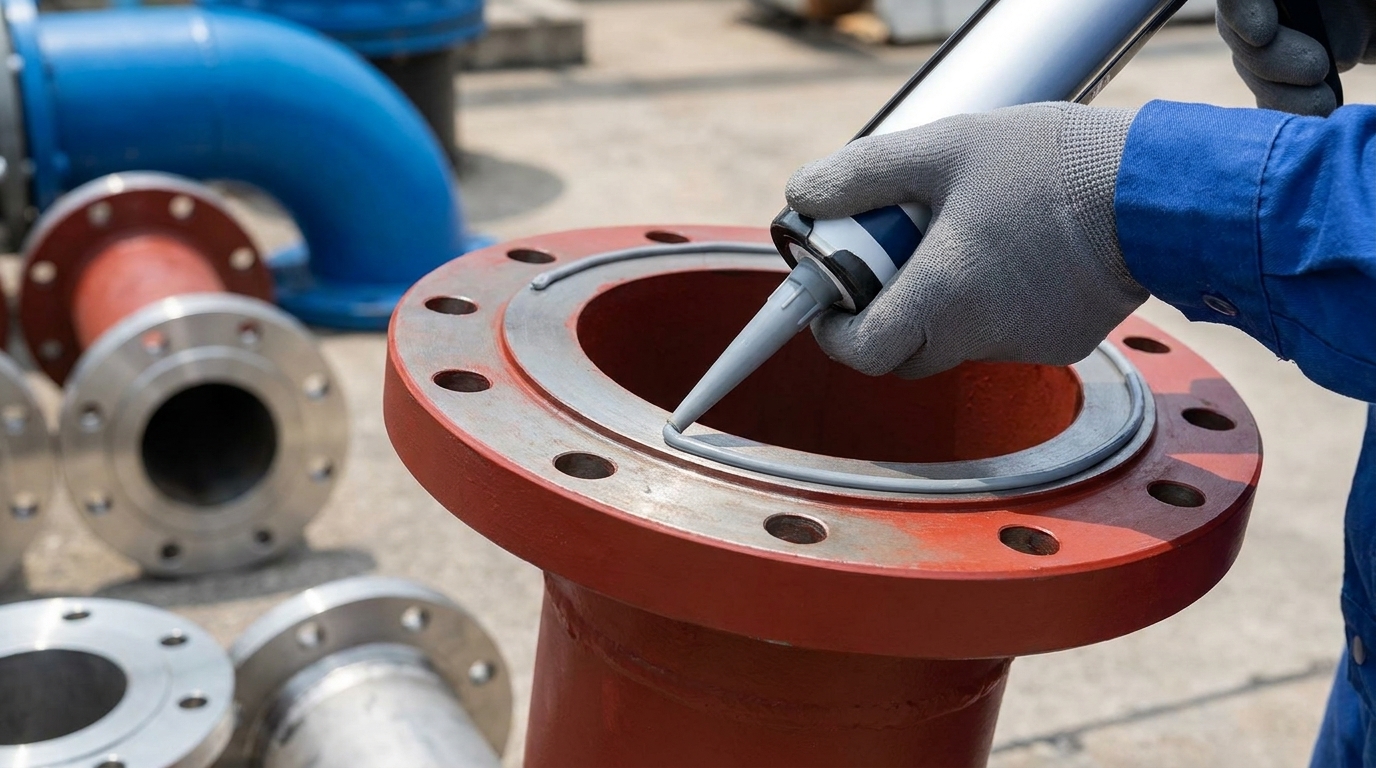
Choosing the Right Gasket Sealant for Industrial Flanges
A gasket alone does not always guarantee a dry flange. Surface imperfections, thermal cycling, and pressure fluctuation can all open a microscopic leak path even with the correct gasket material installed. Sealant compounds fill that gap, and picking the wrong one can undo the benefit of an otherwise correct gasket specification.
Sealant Is a Different Decision Than Gasket Material
Gasket material selection and sealant selection solve related but distinct problems. The gasket provides the primary compressible barrier between two industrial flanges. Sealant, when used, is applied to fill microscopic surface irregularities the gasket alone cannot compensate for, or to aid assembly and future disassembly. Not every flanged joint needs a sealant compound in addition to the gasket, and using the wrong sealant chemistry against a compatible gasket material can create a chemical incompatibility that neither component would cause on its own.
When a Sealant Compound Is Necessary
Sealants earn their place on flange faces with surface pitting, minor warping, or wear from repeated disassembly, where an industrial gasket alone may not fully compensate for an imperfect mating surface. They are also common on threaded connections working alongside flanged systems, and on joints that see frequent maintenance disassembly where a light anti-seize or sealant compound eases future service. A properly machined, undamaged flange face paired with a correctly rated gasket often does not need an additional sealant at all, and adding one without a clear reason can introduce unnecessary chemical exposure to the joint.
Matching Sealant Chemistry to Process Fluid
The sealant has to survive the same chemical environment as the gasket and the pipe itself. Silicone-based sealants perform well in general water and mild chemical service but are not suited to aggressive solvents or high-temperature hydrocarbon service. PTFE-based paste and tape sealants offer broad chemical resistance and are common in aggressive chemical processing applications. Anaerobic sealants cure in the absence of air and are typically reserved for mechanical joints rather than gasketed flanges. The gasket manufacturer’s compatibility data should always be checked before adding a sealant compound the gasket material was not tested against.
Temperature Range and Cure Behavior
Sealants have their own temperature limits, separate from the gasket material’s rating, and exceeding those limits causes the sealant to break down even if the gasket itself is still performing correctly. Some sealants remain permanently flexible after curing, which suits joints that see thermal cycling, while others cure rigid and are better suited to static, low-vibration service. Checking both the sealant’s temperature range and its cure behavior against the actual operating conditions prevents a mismatch that shows up months after installation rather than at startup.
| Sealant Type | Chemical Resistance | Typical Temperature Range | Best Fit |
|---|---|---|---|
| Silicone | Moderate | Wide, general service | Water, mild chemical, general industrial |
| PTFE paste or tape | Broad, including aggressive chemicals | Wide | Chemical processing, threaded and flanged joints |
| Anaerobic | Narrow, application specific | Moderate | Mechanical joints, not typically gasketed flanges |
The ASTM International gasket and sealant standards, including specifications governing flange gasket materials, are a useful reference point when documenting a sealant choice for a plant’s engineering records.
How Coastal Resource Group Supports Flange Sealing Decisions
Getting the gasket right and then undermining it with the wrong sealant compound is a preventable failure. Coastal Resource Group supplies flanges, flange bolts, and gasket materials matched to the process conditions the joint sees.
- Industrial flanges and flange bolts across common pressure classes
- B7 and B8 bolt grades for flanged connections
- Guidance on gasket and sealant compatibility for specific process fluids
- 24/7 support for urgent flange repair needs
A leaking flange after a rebuild is often a sealant compatibility problem rather than a gasket problem. If you want help matching a sealant to your gasket and process fluid, request a quote from Coastal Resource Group or call 888-841-7954.