Can You Weld Galvanized Pipe Safely
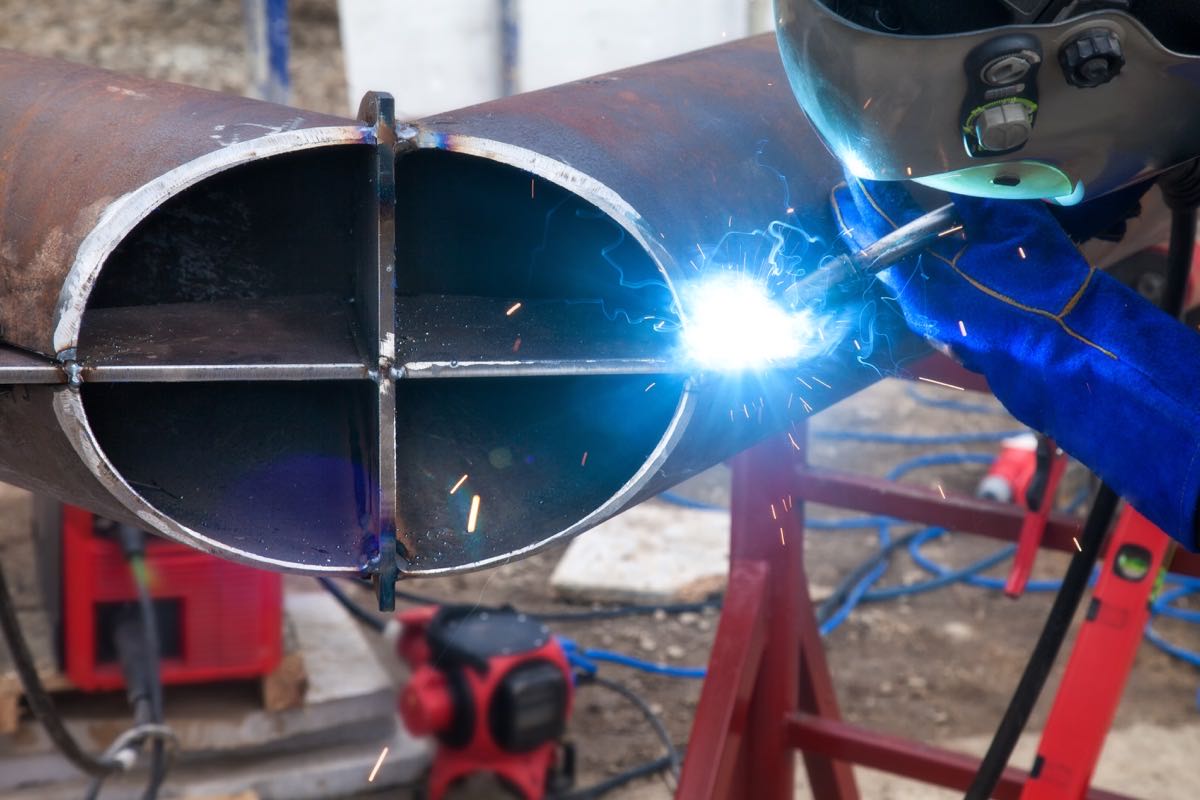
Striking an arc on galvanized pipe without preparation sends zinc oxide fumes straight into a welder’s breathing zone, and the effects can hit within hours. Welding galvanized pipe is possible, but it is not a job to approach the same way as bare steel, and skipping the precautions has a well-documented health cost.
What Happens When Zinc Coating Is Welded
Galvanized pipe is coated in zinc to prevent corrosion, and that coating vaporizes well below the melting point of the base steel underneath. The vaporized zinc oxidizes in the air and forms a fine fume that is easy to inhale in an enclosed or poorly ventilated space. Unlike many welding hazards that cause immediate, obvious symptoms, zinc fume exposure often does not announce itself until hours after the work is finished. It is worth weighing that risk against non-welded connection methods before committing to a weld on a coated pipe.
Metal Fume Fever Is a Real and Common Risk
Welders who inhale enough zinc oxide fume can develop metal fume fever, a flu-like illness with chills, fever, muscle aches, and chest tightness that typically appears several hours after exposure. It is not usually life-threatening on its own, but it is unpleasant, avoidable, and a clear signal that ventilation and protection were inadequate for the job. Repeated exposure without proper controls is not something to treat casually, and it is a preventable injury with the right setup. The Occupational Safety and Health Administration maintains exposure limits and guidance for welding fume hazards, including zinc oxide, that should inform any galvanized welding job.
Preparation Reduces the Risk Without Eliminating the Job
Grinding away the zinc coating at and around the weld joint before striking an arc significantly cuts the amount of fume generated, since less coated material is being vaporized. This does not eliminate the need for ventilation and respiratory protection, but it reduces the fume load meaningfully. Local exhaust ventilation positioned to pull fume away from the welder’s breathing zone, combined with a properly rated respirator when ventilation alone is not sufficient, are the standard controls for this type of work.
Ventilation and Respiratory Protection Requirements
Welding galvanized pipe outdoors or in a well-ventilated shop with cross airflow reduces risk substantially compared to an enclosed space. Confined space welding on galvanized pipe, such as inside a vault or tank, requires forced ventilation or supplied-air respiratory protection, since natural airflow cannot be relied on to clear the fume fast enough. A welder’s regular dust mask does not filter metal fume adequately; a properly rated respirator from a stocked industrial safety and PPE supply is required once ventilation alone cannot keep exposure below recommended limits.
When Avoiding the Weld Is the Better Call
On many galvanized repairs, a mechanical coupling, grooved fitting, or flanged connection accomplishes the same joint without generating any zinc fume at all. For a field repair where proper ventilation and respiratory protection are not readily available, a non-welded connection is often the safer and faster choice. Welding galvanized pipe correctly is a controllable risk with the right setup, but it is worth asking whether welding is necessary at all before committing to it.
How Coastal Resource Group Supports Safer Galvanized Repairs
Not every galvanized repair needs to involve a weld, and Coastal Resource Group stocks the mechanical fittings that let crews avoid the zinc fume exposure question entirely when a non-welded option fits the job.
- Compression, grooved, and flanged fittings for galvanized pipe repairs
- Industrial flanges and bolts for permanent tie-ins without welding
- Two Texas locations for fast fitting delivery on active jobs
- 24/7 emergency supply support
A metal fume fever case is a preventable injury, and often the fastest fix is avoiding the weld rather than protecting against it. If you need fittings that get a galvanized repair done without striking an arc, request a quote from Coastal Resource Group or call 888-841-7954.