
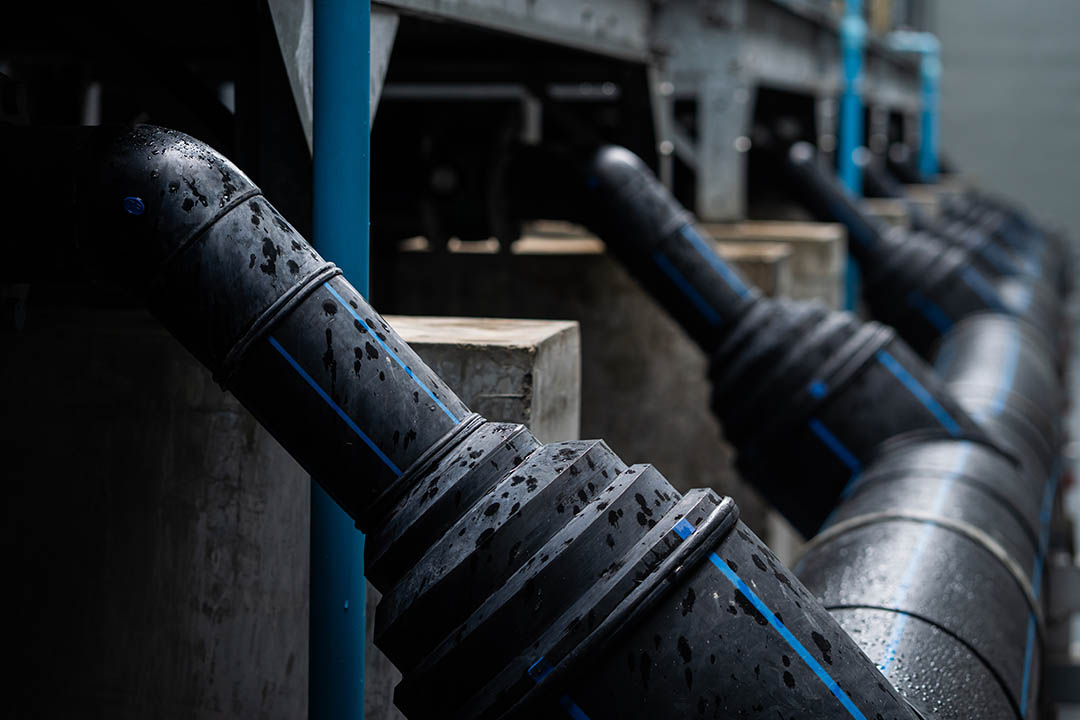
Chemical injection is one of the most overlooked pipe specification decisions on a Texas oil and gas project. The lines are small, typically half an inch to two inches in diameter, and they don’t move production volumes the way gathering system pipe does. But they carry some of the most aggressive chemicals on a well site: methanol, scale inhibitors, corrosion inhibitors, H2S scavengers, and biocides. The pipe that handles them takes more chemical abuse per square inch than almost anything else on the location.
Carbon steel fails internally on these lines faster than most operators expect. Stainless handles the chemistry but adds cost and weight the application doesn’t justify. HDPE pipe has become the practical standard for chemical injection service across Texas oilfield operations, and understanding why helps clarify both the specification and its limits.
HDPE’s chemical resistance profile is broad and well-documented. For a detailed look at how it performs against specific fluid types and concentrations, A Field Guide for HDPE Chemical Resistance in Industrial Applications covers compatibility data relevant to oilfield injection service.
What Chemical Injection Lines Actually Carry
The chemicals moving through an injection line vary by well, formation water chemistry, and production conditions. The Plastics Pipe Institute publishes chemical compatibility guidance for HDPE pipe that covers most of the compound types used in Texas injection programs. Across Permian Basin, Eagle Ford, and Gulf Coast operations, the most common chemicals include:
- Methanol, injected at the wellhead and in flowlines to prevent hydrate formation in wet gas and condensate service
- Scale inhibitors, phosphate and polymer-based compounds that prevent calcium carbonate and barium sulfate scale in produced water systems
- Corrosion inhibitors, film-forming compounds that protect carbon steel gathering lines and vessels from internal attack
- H2S scavengers, triazine or aldehyde-based products that neutralize hydrogen sulfide in sour production streams
- Biocides, glutaraldehyde and related compounds used to control sulfate-reducing bacteria in produced water handling
- Oxygen scavengers, injected into water injection systems to prevent dissolved oxygen corrosion
Each chemical has a different compatibility profile with pipe materials. HDPE handles most of them well at normal operating concentrations, but concentration and temperature both affect that compatibility, and field conditions don’t always match the assumptions in a standard chart.
Why Carbon Steel Falls Short on These Lines
Carbon steel is the default material for most oilfield piping in Texas, but chemical injection lines are one of the clearer cases where that default creates problems. The chemicals moving through these lines, particularly methanol, H2S scavengers, and scale inhibitors, attack carbon steel from the inside. Corrosion inhibitors help, but they treat the production stream, not the injection line itself. A line carrying corrosion inhibitor in carbon steel pipe still corrodes internally from the undiluted chemical concentrate.
Stainless steel handles the chemistry well, but at one-inch to two-inch diameter and injection rates that typically run in gallons per hour, the cost premium is hard to justify operationally. Stainless also adds weight and requires more care at connections and fittings on locations where crews work quickly and often in remote terrain.
HDPE doesn’t corrode. It doesn’t scale internally. It doesn’t react with methanol, phosphate scale inhibitors, or most biocide formulations at the concentrations typical of oilfield injection service. The HDPE pipe specifications used in oil and gas applications are well-established for both large-diameter gathering pipe and small-diameter chemical injection service, and the material eliminates the internal corrosion problem that makes carbon steel a recurring maintenance cost on these lines.
Pipe Selection Parameters for Chemical Injection Service
Specifying HDPE for chemical injection requires attention to four variables: PE grade, DR rating, pipe size, and connection method. Getting any one of them wrong can produce a failure in an application that should otherwise be low-maintenance.
PE grade. PE4710 is the preferred grade for chemical injection service. Its higher density and stress crack resistance handle the combined stresses of chemical exposure, pressure cycling, and temperature variation better than PE3408 over a long service life.
DR rating. Chemical injection lines in high-pressure service, upstream of the check valve and pump or tied directly into gathering system pressure, typically require SDR 11 or SDR 9. Lower-pressure downstream segments can use SDR 17 or SDR 13.5. Confirming the actual operating pressure at the injection point is the first step in DR selection.
Pipe size. The majority of chemical injection applications run in half-inch, three-quarter-inch, one-inch, or two-inch sizes. At these diameters, HDPE is available in coil form, which simplifies installation across long pad site distances or along flowline routes without requiring multiple joints.
Connection method. For small-diameter HDPE in chemical injection service, compression fittings or electrofusion fittings are standard. Butt fusion is impractical at these diameters. Compression fittings work well for surface installations where the connection is accessible for inspection. Electrofusion is preferred for buried or semi-permanent installations where joint integrity needs to match the pipe’s service life.
Temperature and Concentration Limits to Know Before Specifying
HDPE chemical resistance is rated at standard conditions, typically 73°F. Field conditions in Texas oilfield service often deviate from that baseline, and the deviation matters.
High temperature. HDPE softens progressively above 140°F. Chemical injection lines near wellheads or high-temperature process equipment need to account for ambient heat exposure, not just the temperature of the injected chemical.
High concentration. Standard chemical resistance charts rate compatibility at full concentration, but some oilfield chemicals, particularly high-concentration H2S scavengers, have limited compatibility with HDPE at undiluted levels. Always verify the specific formulation with the chemical supplier and HDPE manufacturer before specifying.
UV exposure. Above-ground chemical injection lines in Texas field conditions face significant UV exposure. Carbon black-stabilized HDPE, standard for field-grade pipe, handles UV well, but confirm this specification is included in the pipe order.
Material Comparison for Chemical Injection Lines
| Factor | Carbon Steel | Stainless Steel | HDPE |
|---|---|---|---|
| Internal corrosion resistance | Poor | Excellent | Excellent |
| Weight at small diameter | Heavy | Heavy | Light |
| Available in coil form | No | No | Yes |
| Internal scale buildup | Common | Low | Minimal |
| Small-diameter connections | Threaded fittings | Threaded or compression | Compression or electrofusion |
| Typical service life in injection service | 5-10 years | 20+ years | 25-50 years |
| Relative cost | Low | High | Moderate |
HDPE Chemical Injection Pipe Supply Across Texas Oilfield Operations
Coastal Resource Group stocks small-diameter HDPE pipe in PE4710 and PE3408 grades across a full range of SDR ratings, available for same-day delivery to well sites and gathering system locations in South Texas, the Permian Basin, and Gulf Coast markets.
- Small-diameter HDPE pipe in 1/2″ through 2″ IPS sizes, available in coil form for continuous runs across pad sites and flowline routes
- SDR 7, SDR 9, and SDR 11 rated pipe for high-pressure injection service upstream of check valves and chemical injection pumps
- Electrofusion and compression fittings compatible with PE4710 and PE3408 at all standard injection line diameters
- Permian Basin and West Texas oilfield delivery from Seguin and East Texas stocking locations
If you’re looking for HDPE pipe for chemical injection lines on a Texas oilfield project, get a quote or call 888-841-7954 to confirm the right DR rating, PE grade, and fitting type for the chemicals and pressures on your location.