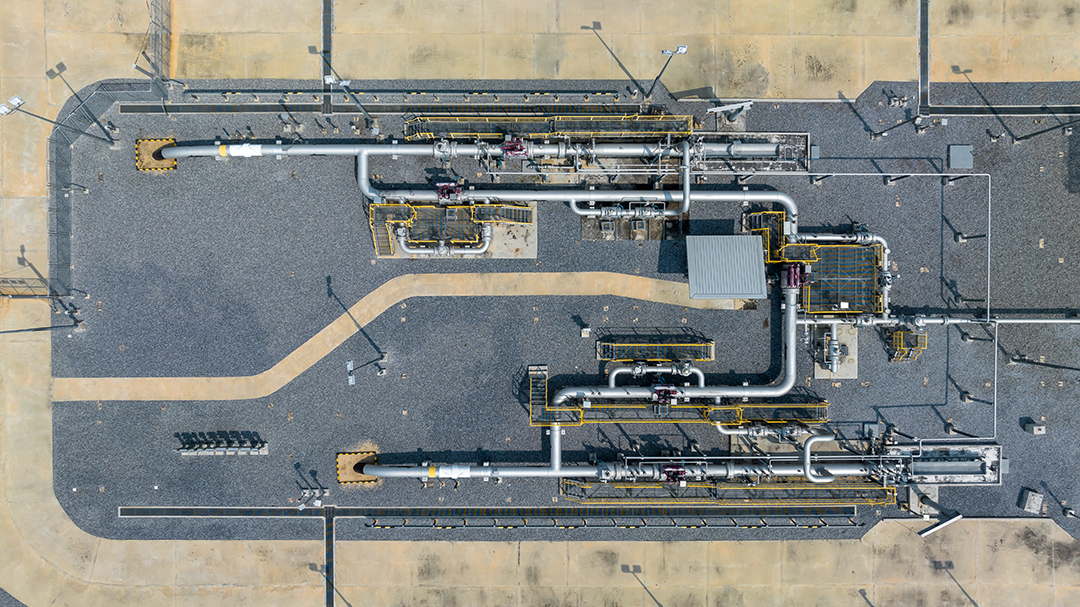
A single unplanned shutdown at a midstream compression station can cost operators tens of thousands of dollars per hour. Pipeline systems, storage terminals, and transfer facilities are connected in a tightly sequenced chain, meaning that when one link is interrupted, the financial and operational impact ripples well beyond the immediate site.
Unplanned downtime in midstream oil and gas operations is rarely caused by one catastrophic failure. More often, it is the result of delayed material procurement, slow supplier response times, or gaps in maintenance-ready inventory. The supplier midstream role has become one of the most closely watched variables in keeping midstream operations online.
What Makes Midstream Operations So Vulnerable to Downtime
Midstream infrastructure includes pipelines, compressor stations, metering systems, storage tanks, and transfer facilities. These assets operate under continuous pressure and are subject to corrosion, mechanical wear, and regulatory inspection cycles. When a valve fails or a section of piping requires immediate replacement, the speed at which the right material arrives on site determines how quickly normal operations can resume.
Many midstream operators manage assets across large geographic areas, often in remote locations where supply access is limited. This geographic complexity increases procurement lead times and raises the stakes for every maintenance decision. Without well-positioned industrial suppliers, even minor repairs can turn into extended shutdowns that affect throughput, contractual commitments, and regulatory standing. The Pipeline and Hazardous Materials Safety Administration maintains strict compliance standards that make fast material sourcing a regulatory concern, not just an operational preference.
Aging infrastructure compounds this risk. Many cast-iron pipelines and tank storage systems across the United States are over 50 years old and overdue for upgrades. Outdated components are more prone to corrosion-related failures and often require non-standard fittings that are harder to source on short notice. The combination of aging assets and limited local supply access creates conditions where downtime events are both more frequent and more expensive to resolve.
The Supplier Midstream Role: Beyond Simple Parts Delivery
The supplier midstream role is not simply about filling purchase orders. Industrial suppliers serve as operational partners, maintaining pre-positioned inventory, coordinating logistics, and providing technical support to maintenance and procurement teams in the field.
When a compressor station needs a specific size of stainless steel pipe or a high-pressure flange assembly, the response time from the supplier directly affects flow assurance and pipeline integrity. Suppliers who stock the right combination of valves, fittings, and pipe are better positioned to protect supply chain uptime for operators who cannot afford delays. The most effective industrial suppliers also understand material specifications well enough to confirm compatibility on short notice, reducing the risk of ordering errors that compound downtime rather than resolve it.
Beyond product availability, the supplier’s knowledge base matters. Midstream maintenance teams often operate under time pressure, and the ability to reach a knowledgeable supplier contact at any hour reduces the decision-making burden on field crews. Suppliers with 24/7 availability are able to support unplanned maintenance events without forcing operators to wait until the next business day to source critical materials. This round-the-clock responsiveness is directly tied to minimizing jobsite downtime at every stage of a repair.
How Fast Delivery Piping Keeps Pipeline Systems Online
Fast delivery piping refers to the ability to source, stage, and deliver piping materials in a timeframe that aligns with maintenance windows rather than extending them. This applies to carbon steel pipe, stainless steel pipe, and HDPE pipe, each of which is used in different sections of the midstream infrastructure depending on application and pressure requirements.
Pipeline maintenance schedules are often constrained by regulatory requirements, production targets, and weather conditions. When piping materials are not available within those windows, operators face a difficult choice: delay the repair or source a substitute material that may not meet the original specification. Neither outcome supports long-term pipeline integrity or regulatory compliance.
Suppliers who operate with expedited logistics capabilities and maintain a regional stock of common piping materials reduce this risk significantly. Fast delivery piping is particularly valuable in active producing regions where field activity is high and material demand can shift quickly due to well completion schedules, pigging operations, or emergency line repairs. The ability to receive a confirmed order and have materials on site within 24 to 48 hours changes how field teams plan and execute maintenance work. The American Petroleum Institute identifies timely material availability as a key factor in maintaining pipeline safety standards across midstream operations.
Supply Chain Uptime Depends on Strategic Inventory Management
Supply chain uptime in midstream operations is maintained through a combination of proactive stocking, responsive procurement, and vendor reliability. When any of these elements is weak, the entire maintenance cycle is at risk.
MRO procurement, which covers maintenance, repair, and operations materials, represents a large portion of midstream operational spend. Yet it is often managed reactively rather than strategically. Suppliers who understand usage patterns, seasonal demand cycles, and site-specific requirements are positioned to stock inventory before it is urgently needed, rather than scrambling after a failure event.
Key materials commonly stocked to support supply chain uptime in midstream environments include:
- Ball valves, gate valves, and check valves across multiple pressure classes
- Carbon steel pipe and stainless steel pipe, nipples, and couplings
- Flanges, bolts, and gaskets rated for high-pressure service
- HDPE pipe and polyethylene fittings for produced water and SWD systems
- Industrial hoses and fitting assemblies for temporary transfer applications
- Rigging equipment, tools, and welding consumables for field repair crews
By working with a supplier who carries this depth of inventory across multiple locations, midstream operators reduce exposure to procurement delays that affect production continuity and maintenance scheduling.
When Material Delays Create Cascading Failures Across Operations
The relationship between material delays and operational continuity is not linear. A delayed fitting or a backordered valve can hold up an entire mechanical crew, preventing a scheduled pigging operation or forcing a temporary bypass that creates a safety exposure. In high-throughput midstream environments, the cost of waiting is compounded at every stage of the repair sequence.
Inspection schedules are pushed, regulatory deadlines are compressed, and labor resources that were staged for a repair are idled or redeployed. These cascading failures are well-documented in midstream operations, and many can be traced back to supply chain gaps rather than equipment failure. Corrosion inhibitor injection systems, pressure control instrumentation, and secondary containment equipment are all examples of systems where delayed material sourcing has historically extended downtime events beyond what was operationally or financially acceptable. The U.S. Department of Energy has documented the operational risks associated with supply chain interruptions in midstream energy infrastructure.
Suppliers with demonstrated 24/7 availability and multi-location distribution networks are better positioned to interrupt these failure chains before they escalate. The ability to source a trunnion ball valve or a stainless steel fitting from a nearby location and have it on site the same day is not a convenience; it is a direct operational control against unplanned downtime.
Selecting a Supplier That Supports Long-Term Operational Goals
Not all industrial suppliers are structured to support the demands of midstream energy. Key attributes that differentiate high-performing industrial suppliers include inventory depth, geographic coverage, technical knowledge, and responsiveness outside of standard business hours.
Midstream operators benefit from working with suppliers who serve both the oilfield and industrial sectors, because this cross-sector experience translates into broader product availability and more flexible sourcing options. A supplier who also serves water treatment, construction, and pipeline construction projects maintains a larger and more diversified inventory base, which benefits operators when standard oilfield supply chains are under pressure. Research from the National Institute of Standards and Technology reinforces that supply chain resilience is directly tied to supplier diversity and geographic distribution.
Long-term supplier relationships also reduce transaction friction. When a supplier’s team is familiar with an operator’s site specifications, preferred brands, and pressure class requirements, orders are processed more accurately and delivered faster. This accumulated operational familiarity is a form of supply chain uptime protection that is not reflected in a product catalog but is felt in every emergency material request.
A Supply Partner Built for Midstream Demands
Coastal Resource Group is a Texas-based industrial, oilfield, and marine supply company with multiple locations serving South Texas, the Eagle Ford Shale, the Permian Basin, and the Houston area. Our inventory is stocked and ready across the materials midstream operations depend on most:
- HDPE pipe and polyethylene fittings for produced water and SWD applications
- Stainless steel and carbon steel pipe, nipples, and couplings
- Flanges, bolts, and gaskets rated for high-pressure service
- Valves, fittings, welding supplies, and safety equipment
- MRO products and rigging equipment for field repair crews
Whether a planned maintenance turnaround requires bulk piping materials or an emergency valve replacement is needed the same day, we deliver without delay. As a centralized sourcing partner, operators across South and West Texas rely on us to consolidate procurement, reduce lead times, and support supply chain uptime across their midstream operations.
When downtime is not an option, your supplier can keep operations moving smoothly. Reach out to our team and let us know what you need today.