
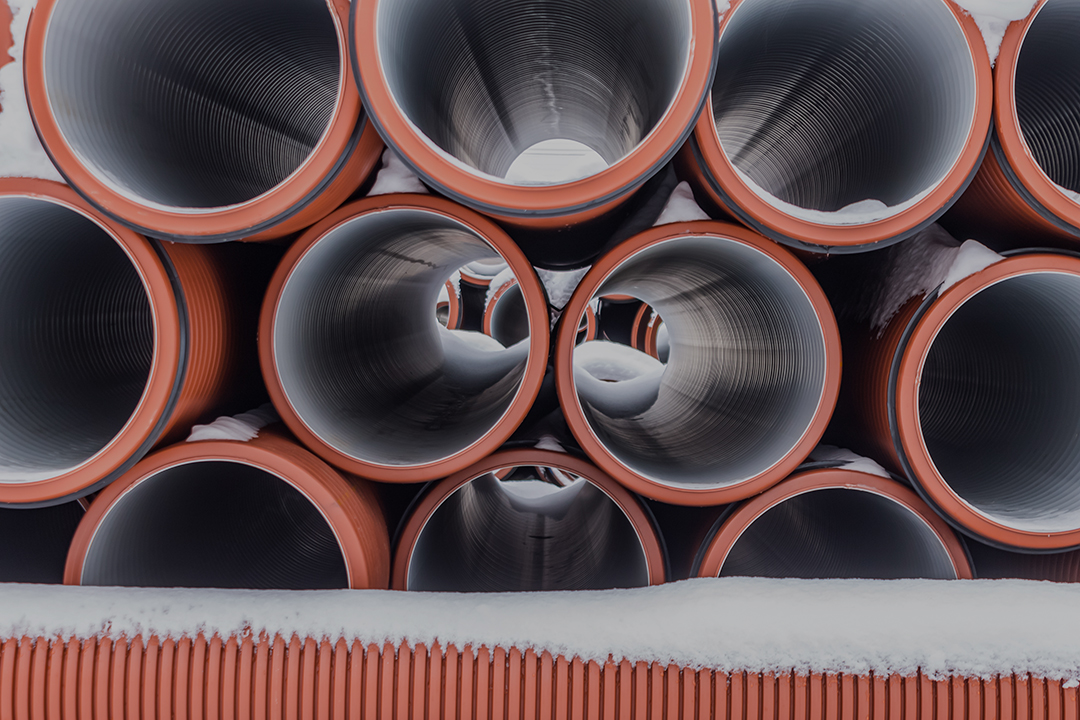
This nominal pipe size chart gives engineers, contractors, and procurement teams a practical way to compare NPS values, outside diameter, inside diameter, pipe schedule, and wall thickness before ordering industrial pipe. It is intended for quick reference when checking steel pipe, stainless steel pipe, seamless pipe, PVC, HDPE, tube, tubing, flanges, fittings, and valves used in demanding field applications.
Nominal pipe size is a trade designation, not a measured pipe diameter. A 2-inch nominal pipe does not have a 2-inch outer diameter. Its OD is 2.375 in (60.33 mm). That difference is why pipe dimensions should always be checked against a reliable chart before selecting components or writing specifications.
Nominal Pipe Size to Outside Diameter Chart
The table below shows common NPS values with outside diameter in inches and millimeters. OD remains fixed for a given nominal size regardless of schedule, which is why it is used as the primary reference for fitting and flange compatibility. Standard sizes range from 1/8 NPS through 24 NPS and beyond, covering the pipe sizes used across most industrial applications.
| Nominal Pipe Size (NPS) | OD (in) | OD (mm) | Circumference (in) |
|---|---|---|---|
| 1/8 | 0.405 | 10.29 | 1.272 |
| 1/4 | 0.540 | 13.72 | 1.696 |
| 3/8 | 0.675 | 17.15 | 2.120 |
| 1/2 | 0.840 | 21.34 | 2.639 |
| 3/4 | 1.050 | 26.67 | 3.299 |
| 1 | 1.315 | 33.40 | 4.131 |
| 1 1/4 | 1.660 | 42.16 | 5.215 |
| 1 1/2 | 1.900 | 48.26 | 5.969 |
| 2 | 2.375 | 60.33 | 7.461 |
| 2 1/2 | 2.875 | 73.03 | 9.032 |
| 3 | 3.500 | 88.90 | 10.996 |
| 3 1/2 | 4.000 | 101.60 | 12.566 |
| 4 | 4.500 | 114.30 | 14.137 |
| 5 | 5.563 | 141.30 | 17.477 |
| 6 | 6.625 | 168.28 | 20.813 |
| 8 | 8.625 | 219.08 | 27.096 |
| 10 | 10.750 | 273.05 | 33.772 |
| 12 | 12.750 | 323.85 | 40.055 |
| 14 | 14.000 | 355.60 | 43.982 |
| 16 | 16.000 | 406.40 | 50.265 |
| 18 | 18.000 | 457.20 | 56.549 |
| 20 | 20.000 | 508.00 | 62.832 |
| 24 | 24.000 | 609.60 | 75.398 |
Note: Circumference is calculated as OD × π. Use these values when wrapping insulation, measuring with a pi tape, or calculating pipe surface area for coating and jacketing projects.
What Is Nominal Pipe Size?
Nominal pipe size is part of a North American set of pipe sizing standards. It gives buyers and engineers a common naming system for standard sizes without requiring every measured dimension to be written into the product name. The word nominal means the size is a reference label — it does not equal the actual outside diameter or inside diameter of the pipe.
In smaller NPS sizes, the gap between the nominal label and measured OD is significant. A 1/8-inch NPS pipe has an OD of 0.405 in (10.29 mm). A 1/4-inch NPS pipe has an OD of 0.540 in (13.72 mm). A 3/8-inch NPS pipe has an OD of 0.675 in (17.15 mm). A 3/4-inch NPS pipe has an OD of 1.050 in (26.67 mm). A 1/2-inch NPS pipe has an OD of 0.840 in (21.34 mm). This offset was established historically to maintain consistent thread and fitting engagement across wall thicknesses.
National pipe size is sometimes used informally when people mean NPS. In industrial supply, NPS values are commonly referenced for carbon steel pipe, stainless steel pipe, seamless pipe, HDPE, PVC, and other pipe products that must connect correctly in the field.
Nominal vs. Actual Pipe Dimensions
The difference between nominal label and actual pipe dimensions is one of the most common sources of ordering errors in industrial piping. A better understanding of that gap comes from looking at actual measured OD, Schedule 40 inside diameter, and wall thickness side by side. The table below shows those actual dimensions for common NPS values so the difference is clear.
| NPS | Actual OD (in) | Actual OD (mm) | Sch 40 ID (in) | Sch 40 Wall (in) |
|---|---|---|---|---|
| 1/2 | 0.840 | 21.34 | 0.622 | 0.109 |
| 3/4 | 1.050 | 26.67 | 0.824 | 0.113 |
| 1 | 1.315 | 33.40 | 1.049 | 0.133 |
| 1 1/2 | 1.900 | 48.26 | 1.610 | 0.145 |
| 2 | 2.375 | 60.33 | 2.067 | 0.154 |
| 3 | 3.500 | 88.90 | 3.068 | 0.216 |
| 4 | 4.500 | 114.30 | 4.026 | 0.237 |
| 6 | 6.625 | 168.28 | 6.065 | 0.280 |
| 8 | 8.625 | 219.08 | 7.981 | 0.322 |
| 12 | 12.750 | 323.85 | 12.000 | 0.375 |
For NPS 12, the inside diameter of Schedule 40 pipe is exactly 12.000 in — one of the few cases where a measured dimension aligns with the nominal label. For every other size, the label is simply a trade reference, not a measurement. This is one of the key aspects of working with standard sizes: always confirm actual dimensions before ordering.
DN to NPS Conversion Chart
Outside North America, pipe sizing uses DN (Diameter Nominal), also called nominal bore or nominal diameter. DN values are metric reference numbers that approximate the nominal diameter of the pipe, similar to how NPS functions in the imperial system. Neither DN nor NPS equals the actual measured OD. When reviewing international specifications, imported pipe documentation, or project drawings that mix standards, confirm which system is being used before matching pipe to fittings, flanges, or valves.
| NPS | DN (mm) | Actual OD (mm) | Actual OD (in) |
|---|---|---|---|
| 1/8 | DN 6 | 10.29 | 0.405 |
| 1/4 | DN 8 | 13.72 | 0.540 |
| 3/8 | DN 10 | 17.15 | 0.675 |
| 1/2 | DN 15 | 21.34 | 0.840 |
| 3/4 | DN 20 | 26.67 | 1.050 |
| 1 | DN 25 | 33.40 | 1.315 |
| 1 1/4 | DN 32 | 42.16 | 1.660 |
| 1 1/2 | DN 40 | 48.26 | 1.900 |
| 2 | DN 50 | 60.33 | 2.375 |
| 2 1/2 | DN 65 | 73.03 | 2.875 |
| 3 | DN 80 | 88.90 | 3.500 |
| 4 | DN 100 | 114.30 | 4.500 |
| 6 | DN 150 | 168.28 | 6.625 |
| 8 | DN 200 | 219.08 | 8.625 |
| 10 | DN 250 | 273.05 | 10.750 |
| 12 | DN 300 | 323.85 | 12.750 |
| 14 | DN 350 | 355.60 | 14.000 |
| 16 | DN 400 | 406.40 | 16.000 |
| 18 | DN 450 | 457.20 | 18.000 |
| 20 | DN 500 | 508.00 | 20.000 |
| 24 | DN 600 | 609.60 | 24.000 |
Note: DN values are approximate nominal references, not precise measurements. Always verify actual OD in mm before specifying pipe to metric-standard fittings or flanges.
How to Measure Pipe Size
Pipe size is not measured the way most people assume. The nominal label stamped on the pipe is a trade reference, not a reading you will get with a caliper or tape measure. Here is how to determine actual pipe dimensions in the field.
Measuring Outside Diameter
Use calipers or a pi tape to measure the outside of the pipe. A pi tape reads circumference and converts it to pipe diameter directly, which is useful when calipers cannot span large-diameter pipe. Once you have the OD, match it to the chart above to confirm the NPS designation.
Measuring Inside Diameter
Inside diameter requires an internal caliper or bore gauge inserted into the pipe end. For standard pipe, you can also calculate ID by subtracting twice the wall thickness from the OD: ID = OD − (2 × wall thickness). For example, a 4-inch Schedule 40 carbon steel pipe has an OD of 4.500 in and a wall thickness of 0.237 in, giving an ID of 4.026 in (102.26 mm). This formula works consistently across pipe sizes and helps determine flow area and liner sizing.
Why the Numbers Do Not Match the Label
For pipe NPS 1/8 through NPS 12, the nominal pipe size does not equal the OD or the ID — it is simply a legacy reference number. For NPS 14 and larger, the nominal size does equal the actual OD. This is one reason a chart is essential when working across size ranges or mixing pipe from different material types or suppliers.
Why Outside Diameter Matters
Outside diameter is the exterior measurement of the pipe and the primary dimension used to determine whether pipes will connect correctly with flanges, fittings, valves, couplings, clamps, and supports. If the outer diameter is wrong, the component will not fit the system.
OD stays constant for a given NPS regardless of schedule or material. Inside diameter changes when pipe wall thickness changes. Two pipes can share the same OD but have different internal flow areas, different pressure ratings, and entirely different service capabilities depending on wall and material.
That distinction matters in systems carrying fluids, gas, slurry, chemicals, wastewater, or process media at high or low pressures. A pipe that looks compatible externally may still be wrong for the service if the wall thickness and material are not reviewed alongside the OD.
Pipe Material and Schedule Interaction
Material selection and schedule number work together to determine a pipe’s pressure rating, weight, and suitability for a given service. The same NPS and schedule designation can represent significantly different performance depending on the base material. This is one of the key aspects of pipe specification that engineering teams must account for when selecting pipe for various industries.
- Carbon steel pipe — most common material for industrial process, utility, and structural applications. High strength with moderate corrosion resistance. Available in seamless and welded forms across most schedules. Allowable stress values come from ASTM A53 or A106 depending on the manufacturing method.
- Stainless steel pipe — used where corrosion resistance, high-temperature service, or cleanliness requirements rule out carbon steel. Common grades include 304 and 316. Wall thickness and pipe schedule designations follow the same NPS system, but pressure ratings differ from carbon steel at equivalent schedules.
- HDPE pipe — specified by DR (dimension ratio) rather than schedule number, though NPS sizing is still used for nominal reference. Common in municipal water, mining slurry, and chemical service at both high or low pressures. OD matches IPS (iron pipe size) standards so fittings and flanges can be matched using the same NPS chart.
- PVC pipe — used primarily in lower-pressure water, drainage, and chemical service. Follows the same NPS OD standard for Schedule 40 and Schedule 80 pipe sizes, making the chart above directly applicable for fitting compatibility.
- Seamless pipe — manufactured without a weld seam, which improves consistency and performance at higher schedule numbers. Often specified for high-pressure, high-temperature, or critical service applications in carbon steel and stainless steel.
When comparing pipe from different material types, OD will match for a given NPS, but allowable stress, pressure rating, and wall thickness tolerances will differ. Always review the applicable material standard — ASTM A53 for carbon steel, A312 for stainless, ASTM F714 for HDPE — alongside the dimensional chart.
How Pipe Schedule Changes Wall Thickness
Pipe schedule is the system used to identify wall thickness for a given NPS. A higher schedule number means a thicker wall. Thicker walls increase pressure capability and mechanical strength but reduce inside diameter and increase weight per foot.
Schedule 40 and Schedule 80 carbon steel pipe share the same OD for a given NPS. The difference is wall thickness, which changes the ID, the flow area, and the allowable operating pressure. For a better understanding of how this works: a 2-inch Schedule 40 pipe has a wall thickness of 0.154 in and an ID of 2.067 in. A 2-inch Schedule 80 pipe has a wall thickness of 0.218 in and an ID of 1.939 in — nearly 1/8 in smaller bore, carrying higher allowable pressure for a given schedule.
Engineers select the proper pipe schedule by reviewing operating pressure, temperature, corrosion allowance, flow requirements, allowable stress values from the applicable code, and connection method. Specifying a given schedule without reviewing these factors can result in pipe that is either underbuilt for the service or unnecessarily heavy for the application. Standard sizes should always be confirmed against actual service requirements, not assumed from the nominal label alone.
| NPS | OD (in) | OD (mm) | Sch 40 Wall (in) | Sch 80 Wall (in) | Sch 40 ID (in) | Sch 80 ID (in) |
|---|---|---|---|---|---|---|
| 1/2 | 0.840 | 21.34 | 0.109 | 0.147 | 0.622 | 0.546 |
| 3/4 | 1.050 | 26.67 | 0.113 | 0.154 | 0.824 | 0.742 |
| 1 | 1.315 | 33.40 | 0.133 | 0.179 | 1.049 | 0.957 |
| 1 1/2 | 1.900 | 48.26 | 0.145 | 0.200 | 1.610 | 1.500 |
| 2 | 2.375 | 60.33 | 0.154 | 0.218 | 2.067 | 1.939 |
| 2 1/2 | 2.875 | 73.03 | 0.203 | 0.276 | 2.469 | 2.323 |
| 3 | 3.500 | 88.90 | 0.216 | 0.300 | 3.068 | 2.900 |
| 4 | 4.500 | 114.30 | 0.237 | 0.337 | 4.026 | 3.826 |
| 6 | 6.625 | 168.28 | 0.280 | 0.432 | 6.065 | 5.761 |
| 8 | 8.625 | 219.08 | 0.322 | 0.500 | 7.981 | 7.625 |
STD, XS, and XXS Pipe Designations
STD, XS, and XXS are legacy wall designations still found in industrial specifications and older project drawings. STD means standard weight. XS means extra strong. XXS means double extra strong. These designations pre-date the schedule number system and are still used in procurement when sourcing pipe against older standards or when a project specification calls for them by name.
Standard weight pipe is commonly used for general service applications at moderate pressure. Extra strong pipe is selected where thicker walls are needed for higher internal pressure, mechanical abuse, or corrosion allowance — and must be able to withstand more demanding service conditions than standard weight. Double extra strong pipe carries the heaviest pipe wall thickness in this legacy system and is reserved for the most demanding service conditions where standard weight and extra strong are not sufficient.
Note: STD, XS, and XXS do not represent the same wall thickness across all NPS values. For sizes up to NPS 10, STD and Schedule 40 are the same. For NPS 12 and above, they diverge. XS equals Schedule 80 only up to NPS 8. Always confirm actual wall dimensions rather than relying on the designation alone.
| Designation | Meaning | Schedule Equivalent (up to NPS 10) | What to Verify |
|---|---|---|---|
| STD | Standard weight | Schedule 40 | OD, wall thickness, weight per foot, and matching schedule |
| XS | Extra strong | Schedule 80 | Inside diameter, pressure rating, connection type, and material |
| XXS | Double extra strong | No direct schedule equivalent | Actual wall, allowable stress, application fit, and procurement lead time |
Nominal Bore, Nominal Diameter, and NPS
Nominal bore and nominal diameter are terms commonly used outside North America to reference pipe size. They function like NPS — a standard label rather than a precise measurement. Nominal bore (NB) is used widely in the UK, India, and Australia. DN is used across Europe and in ISO-standard documentation.
When reviewing imported pipe, international project drawings, or specifications that mix systems, confirm whether the document uses NPS, DN, nominal bore, or nominal diameter. The OD in mm will be the same for equivalent sizes, but tolerances, pressure class designations, and thread standards may differ between systems.
This matters when matching steel pipe, stainless steel pipe, PVC, or HDPE pipe from different suppliers or different countries. A small specification difference can affect threaded connections, flanges, fittings, valves, and field assembly.
Pipe vs. Tube Dimensions
Pipe and tube are not measured the same way. Pipe is specified by nominal pipe size and pipe schedule. Tube and tubing are specified by actual outside diameter and wall thickness — meaning a 2-inch tube has a true OD of 2.000 in, while a 2-inch NPS pipe has an OD of 2.375 in (60.33 mm).
That difference matters when substituting products or sourcing components. Fittings, clamps, and supports designed for tubing will not fit NPS pipe of the same labeled size. Tube is commonly used in structural, mechanical, instrumentation, and heat transfer applications. Pipe is used for transporting fluids, gas, slurry, steam, and process media under pressure.
When a specification calls for tube or tubing, do not substitute NPS pipe without verifying OD compatibility. The actual dimensions are different even when the nominal label appears similar.
Where Standard Pipe Sizes Are Used
Standard NPS sizes are used across various industries because they simplify engineering, purchasing, fabrication, installation, and maintenance. When the same dimensional standard is followed, pipe from one supplier can be connected to fittings, flanges, and valves from another without field modification.
- Oil and gas transmission, gathering, and facility piping
- Municipal water treatment and distribution systems
- Chemical processing and petrochemical plants
- Mining slurry lines and dewatering systems
- Industrial manufacturing and utility piping
- Steam and condensate distribution systems
- Stormwater, drainage, and infrastructure projects
- High-pressure and low-pressure utility service lines
- HDPE water mains and force mains
- Offshore and subsea piping systems
Across all of these applications, the correct pipe dimensions must be matched to the service conditions — operating temperatures, fluid or gas type, corrosion environment, and connection method — before selection is finalized.
How to Read a Pipe Specification
A complete pipe specification includes more than a nominal label and a schedule. For industrial purchasing, the following details should be confirmed before the order is placed. These consist of the core dimensions and material requirements needed to determine whether a given pipe will withstand the application:
- NPS or nominal diameter
- Pipe OD and inside diameter
- Pipe schedule and actual wall thickness
- Material — carbon steel, stainless steel, HDPE, PVC, or seamless pipe
- Product standard — ASTM A53, A106, A312, F714, or equivalent
- End connection — plain end, beveled, threaded, grooved, or flanged
- STD, XS, or XXS designation if called out in the spec
- Operating pressure, temperature range, and service environment
- Coating, lining, testing, or inspection requirements
Checking these details before the order is placed reduces field delays, rework, and mismatched components on arrival.
Common Mistakes When Ordering Pipe
The most common mistake is assuming the nominal label equals the pipe diameter. A close second is ordering by OD alone while ignoring schedule. Two pipes with the same outer diameter can have significantly different inside diameter, wall thickness, pressure rating, and weight — none of which are visible from the OD alone.
Substituting pipe materials without checking OD compatibility is another frequent problem. Carbon steel pipe, stainless steel pipe, HDPE, PVC, and seamless pipe may follow different dimensional standards even when the listed NPS appears identical.
Threaded systems require extra care. The pipe wall thickness affects thread depth, engagement length, and joint strength. If the wall is too light for the given schedule specified in a threaded connection, the system may not withstand operating loads or mechanical stress safely.
Why Accurate Pipe Dimensions Matter
Accurate pipe dimensions reduce ordering errors, procurement delays, field rework, and fabrication problems. In industrial projects, the wrong dimensions can delay installation, create mismatched fittings, or require material returns and replacement orders under schedule pressure.
In some applications, a thicker wall is required for pressure containment, corrosion allowance, or mechanical strength. In others, unnecessary wall thickness adds weight, reduces flow area, and increases material cost without improving performance. The best selection depends on the system details — not the nominal label.
Reviewing OD, inside diameter, wall thickness, pipe schedule, material, and pressure requirements together gives engineers and procurement teams a practical way to compare options and order with confidence. This approach applies consistently across steel pipe, stainless steel pipe, seamless pipe, HDPE, and PVC pipe sizes used in various industries.
Need Help Matching Pipe Dimensions?
Coastal RGP supplies industrial piping products including carbon steel pipe, stainless steel pipe, HDPE pipe, PVC-related components, seamless pipe, flanges, fittings, valves, and supporting products for demanding industrial applications across various industries.
Whether you need help verifying pipe OD, selecting the correct schedule number, reviewing a material specification, comparing wall thickness options, or confirming fitting and flange compatibility, contact Coastal RGP for technical support.
Frequently Asked Questions
Does nominal pipe size equal actual diameter?
No. For NPS 1/8 through NPS 12, the nominal label does not match the actual OD or ID. For NPS 14 and larger, the nominal size equals the actual OD. Always confirm actual dimensions before ordering or specifying pipe.
Is pipe measured by inside diameter or outside diameter?
Pipe is referenced by nominal pipe size, which relates loosely to inside diameter in smaller pipe sizes but does not equal either OD or ID. OD is the primary measurement used for fitting and flange compatibility. ID is calculated from OD minus twice the wall thickness and depends on the pipe schedule selected.
What is the outside diameter of a 2-inch pipe?
A 2-inch NPS pipe has an OD of 2.375 in (60.33 mm) regardless of schedule or material. Inside diameter depends on wall thickness — Schedule 40 gives an ID of 2.067 in, while Schedule 80 gives 1.939 in.
What is the outside diameter of a 1/2-inch pipe?
A 1/2-inch NPS pipe has an OD of 0.840 in (21.34 mm). Schedule 40 wall thickness is 0.109 in, giving an ID of 0.622 in. Schedule 80 wall is 0.147 in, giving an ID of 0.546 in.
What does nominal bore mean?
Nominal bore (NB) is a pipe sizing reference used in the UK, Australia, and other regions. It is functionally equivalent to NPS — a label rather than a measurement. A nominal bore 50 pipe corresponds to NPS 2 with an OD of 60.33 mm (2.375 in).
What is pipe OD?
Pipe OD means outside diameter — the measurement across the exterior of the pipe. It is used to match pipe with fittings, flanges, valves, clamps, supports, and insulation. OD is fixed for a given NPS regardless of schedule or material type.
Why does wall thickness matter?
Wall thickness determines inside diameter, pressure rating, weight per foot, and allowable stress. A thicker wall increases pressure capability and mechanical strength but reduces flow area. Specifying the wrong wall for the operating pressure and material can create safety and performance problems.
What does STD mean in pipe?
STD is a legacy pipe wall designation meaning standard weight. For most pipe sizes up to NPS 10, STD equals Schedule 40. For larger sizes, the relationship changes. STD is listed alongside XS (extra strong) and XXS (double extra strong) in many pipe specifications and procurement documents.
What is the difference between extra strong and double extra strong?
Extra strong (XS) pipe has a heavier wall than standard weight and is roughly equivalent to Schedule 80 for pipe sizes up to NPS 8. Double extra strong (XXS) carries an even heavier wall with no direct schedule equivalent and is used where maximum wall thickness is required for severe service conditions.
Why are inches and millimeters both shown?
Many industrial projects reference OD in inches for NPS-based specifications and in millimeters for metric fittings, imported products, international documentation, or DN-based specifications. Showing both reduces conversion errors and simplifies cross-referencing between NPS and DN pipe sizing systems.
What pipe sizes are covered by this chart?
This chart covers standard sizes from 1/8 NPS through 24 NPS, which consists of the most commonly specified steel pipe, stainless steel pipe, carbon steel pipe, HDPE, and PVC pipe sizes used across various industries. Larger NPS sizes are available — contact Coastal RGP for dimensions on pipe sizes outside this range.
How do I determine pipe size from a given schedule?
To determine pipe dimensions for a given schedule, start with the NPS and find the OD from the chart above. Then look up the wall thickness for that pipe schedule in the STD/XS table or schedule-specific references. Subtract twice the wall thickness from the OD to calculate inside diameter. This method works consistently across all standard sizes and gives procurement teams a reliable way to specify pipe wall thickness without ambiguity.