
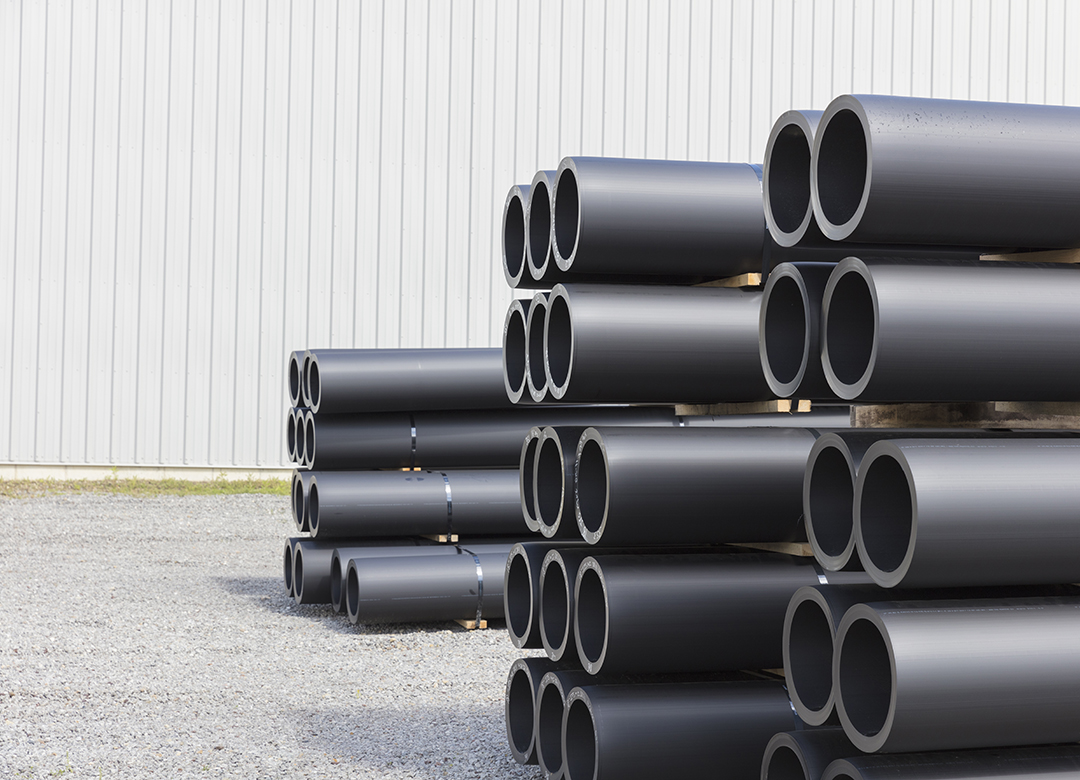
Geothermal systems are reshaping how commercial and industrial facilities manage heating and cooling. As energy efficiency and long-term reliability become higher priorities for both residential and commercial properties, the demand for specialized materials like HDPE pipe has grown steadily. With its proven durability and performance, geothermal HDPE pipe is the preferred material for building closed-loop ground heat exchange systems that power today’s most efficient HVAC solutions.
Why HDPE Pipe is Ideal for Geothermal Systems
High-density polyethylene (HDPE) pipe offers a combination of mechanical strength, corrosion resistance, and long service life that makes it ideal for geothermal heating and cooling. Its flexibility and thermal fusion capability allow for continuous, leak-proof piping systems that outperform traditional materials like PVC or metal in underground installations.
Geothermal HDPE pipe is commonly used in ground loop systems where fluid circulates through the pipe to transfer heat to and from the earth. This closed-loop system requires durable piping that can withstand pressure and environmental stress for decades without failure.
Advantages of Geothermal HDPE Pipe
HDPE pipe has become the standard for geothermal applications due to its unmatched reliability and performance in underground thermal systems. Its material properties offer several long-term benefits for heating and cooling infrastructure.
- Corrosion Resistance: HDPE does not corrode or rust underground, even in aggressive soil conditions.
- Flexible Installation: HDPE can be coiled or bent to accommodate directional changes and site layouts.
- Long Service Life: Typically rated for 50 to 100 years depending on usage and environmental conditions.
- Thermal Efficiency: Excellent insulation properties reduce energy loss in geothermal loops.
- Fusible Joints: Heat fusion creates a monolithic piping system with no mechanical joints or weak points.
Understanding the Geothermal Thermal Loop
The heart of a ground source heating and cooling system is the geothermal thermal loop. This buried network of HDPE pipes allow thermal energy transfer between the building and the earth. The loop is either installed vertically using boreholes or horizontally using trenches, depending on site conditions and space availability.
During heating seasons, fluid in the pipe absorbs heat from the ground and delivers it indoors. In cooling seasons, the process is reversed, transferring unwanted heat from the building into the earth. This consistent loop operation is possible thanks to the thermal conductivity and pressure tolerance of HDPE pipe.
| Loop Type | Installation | Typical Use |
| Horizontal Loop | Laid in trenches 4–6 feet deep | Open land installations with ample space |
| Vertical Loop | Drilled boreholes 100–400 feet deep | Urban or space-limited projects |
| Pond/Lake Loop | Submerged in a nearby water body | Projects near stable water sources |
Choosing the Right HDPE Pipe for Your Geothermal Project
When specifying HDPE for geothermal use, it’s important to consider pipe dimensions, pressure ratings, and certifications. Most geothermal pipe supply is made from PE 4710 material, offering superior resistance to stress cracking and hydrostatic pressure.
Key Specifications
- Material Grade: PE 4710 or PE3608 recommended for geothermal applications.
- Pressure Rating: Usually SDR11 or SDR13.5, depending on system design.
- Coil or Stick: Available in long coils or straight lengths for flexibility on-site.
- Certifications: IGSHPA-compliant, ASTM D3035, NSF-14 certified
Proper installation also plays a critical role. Heat fusion welding is commonly used to join HDPE sections, creating a leak-free, continuous system. Fusion machine rentals are often required for on-site joining and are available through most geothermal pipe supply companies.
Industrial and Commercial Applications
Geothermal HDPE systems are being widely adopted in a range of industrial and commercial sectors. Facilities that require year-round climate control with minimal maintenance are especially suited to this technology. HDPE thermal loops help stabilize operational costs and meet sustainability goals.
Industries Benefiting from Geothermal HDPE
- Petrochemical plants and refineries;
- Office campuses and municipal buildings;
- Healthcare facilities and research centers;
- Warehouse and logistics operations; and
- School districts and higher education campuses.
In Texas and surrounding regions, HDPE geothermal systems are becoming a go-to choice due to extreme weather conditions and increasing energy costs. Underground piping maintains consistent thermal transfer regardless of above-ground temperature fluctuations.
Streamlining Geothermal Pipe Supply for Projects
Timely access to geothermal pipe and fittings is critical to keeping projects on schedule. Delays in pipe delivery, fittings, or fusion equipment can halt installation, causing significant cost overruns. Working with a dedicated industrial supplier helps eliminate this risk.
Reliable geothermal pipe supply should include:
- Wide selection of HDPE diameters and pressure classes;
- Fusion fittings and transition couplings;
- Rental options for fusion machines;
- Stocking availability for urgent needs; and
- Knowledgeable sales support on system design and compatibility.
Pipe should be stored and handled properly to prevent deformation or contamination. Project teams should plan ahead to ensure all components, such as manifolds, valves, and insulation, are ready before trenching or drilling begins.
Fusion Equipment and Installation Support
Fusion welding is the standard for assembling geothermal HDPE systems. The process involves heating the ends of two pipe segments and pressing them together to form a seamless joint. This eliminates leakage points and preserves long-term system integrity.
Fusion machines come in various configurations to match pipe diameter and field conditions. Portable units are used for smaller jobs or tight spaces, while tracked or hydraulic systems are chosen for large-scale installations.
Common Fusion Equipment Options
- Manual butt fusion machines (up to 6-inch pipe);
- Hydraulic fusion systems for 8-inch and larger pipe;
- Socket fusion tools for smaller pipe connections; or
- Electrofusion couplers for special joint conditions.
Working with a supplier who provides fusion machine rental and technical support reduces project delays and increases reliability during construction. On-site training or setup assistance is also helpful, especially for crews new to geothermal systems.
How Coastal Resource Group Supports Geothermal Contractors
Coastal Resource Group supplies high-quality geothermal HDPE pipe, fittings, and fusion equipment to industrial and commercial projects across Texas. With a strong footprint in South and Central Texas, our team supports oilfield operations, municipal contracts, and plant infrastructure upgrades with 24/7 availability and fast delivery.
We stock HDPE pipe in a range of sizes and ratings suitable for geothermal thermal loop installations. Whether you’re drilling boreholes in Eagle Ford or trenching near the Gulf Coast, we deliver the products and tools to keep your job moving without delays.
What sets Coastal Resource Group apart:
- Reliable geothermal pipe supply shipped from Texas.
- Fusion machine rental with expert assistance.
- 24/7 support from experienced sales representatives.
- One-stop access to valves, fittings, PPE, and industrial equipment.
- Responsive service for emergency jobsite needs.
Our team understands the time-sensitive nature of geothermal projects and delivers what you need to avoid lost time and money. From pre-construction planning to final connections, Coastal Resource Group is your trusted industrial supply partner for efficient geothermal installations. Contact us today to learn more about our HDPE pipe solutions for efficient geothermal heating and cooling.