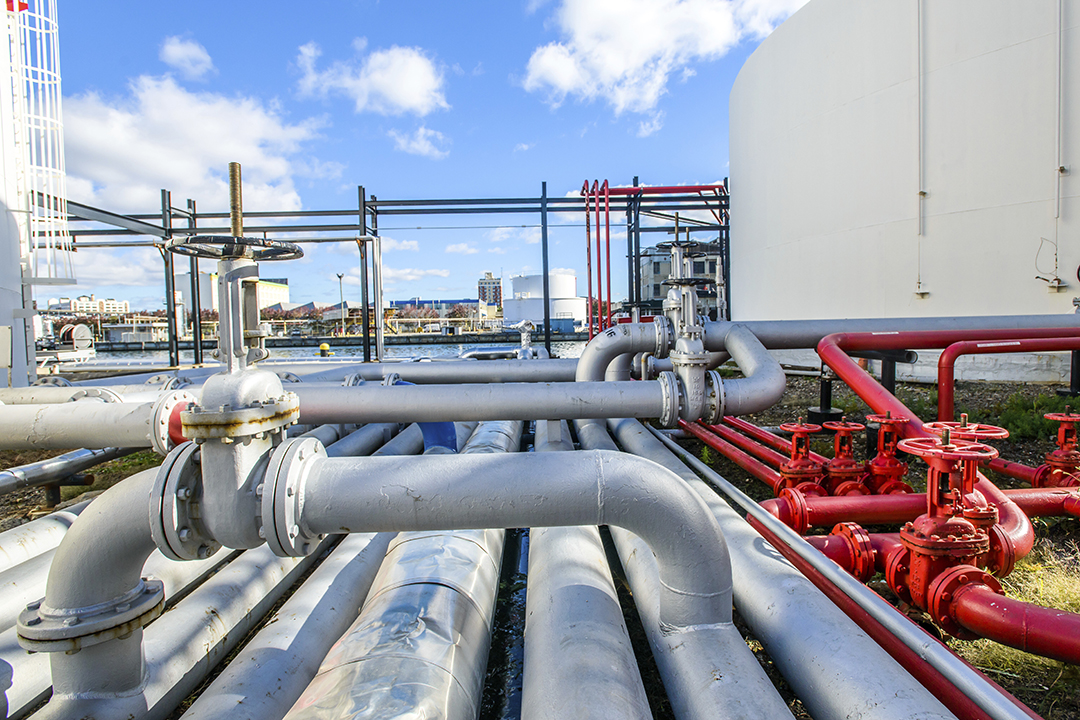
Chemical-resistant piping is often selected when process fluids are acidic, caustic, oxidizing, or solvent-based. The chemical coating may protect the pipe wall, but leakage at a flange can still be triggered when the gasket polymer is attacked, softened, swollen, or embrittled. In many industrial operations, a mismatch is created when a “chemical-resistant pipe” label is treated as a complete solution, and gasket selection is not given due diligence. Seals are expected to survive exposure, bolt load changes, thermal cycling, and permeation. When those variables are accounted for, failure rates are typically reduced, and service life is commonly extended.
Chemical Exposure That Changes Gasket Performance
In chemical service, a gasket is exposed to more than liquid contact at the flange. Vapor, splash, and permeation may all be present, and corrosion may be accelerated at elevated temperatures. Compatibility charts are often used to match pipes to gaskets, but the outcome is ultimately influenced by concentration, pressure, cycling, and dwell time of chemical processes. In gasket chemical use, the same fluid can behave differently when the temperature rises or when solvent blends are present.
Three common degradation modes are typically seen across multiple industrial settings:
- Swelling and softening so bolt load is lost, and leak paths are opened.
- Hardening and cracking so that conformability is reduced, and flange serrations are not filled.
- Extraction and permeation, so weight loss, blistering, or stress cracking is triggered.
When a gasket is selected, chemical resistance is expected, but mechanical behavior must also be kept within limits. Compression set, creep relaxation, tensile strength, and permeability are often treated as equal partners to chemical compatibility. Understanding gasket failure modes before selection can reduce the risk of premature leakage in aggressive media.
Piping Material Effects on Gasket Selection Decisions
Chemical-resistant piping is commonly installed as thermoplastics, lined metal, or corrosion-resistant alloys. Each option changes the sealing environment. Bolt load capability, flange stiffness, and surface finish are usually different between steel, HDPE stub ends, and molded plastic flanges. As a result, corrosive piping gaskets are not chosen by fluid alone; the piping material and joint design are also used as selection inputs.
Thermoplastics such as PVC and CPVC, PP, PVDF, and HDPE are often paired with full-face gaskets so the flange face is supported. Lower allowable bolt stress is usually required, and creep relaxation is expected over time. A gasket material with low seating stress demand is often preferred.
PTFE-lined steel systems frequently use PTFE envelope gaskets or expanded PTFE sheets when broad chemical resistance is needed. In these systems, permeation and cold flow are typically managed through correct thickness, torque control, and flange finish.
Corrosion-resistant alloys such as 316/316L stainless steel, duplex stainless, titanium, or nickel alloys are often selected where temperature and pressure are high. In these cases, graphite, spiral-wound constructions, or high-performance fluoropolymers may be considered depending on oxidizers and cleanliness requirements.
Resistant Gasket Types Used in Aggressive Media
The phrase resistant gasket types is often used as a shortcut, but “resistant” should be defined by the chemical family, temperature, and load range. Several gasket categories are used repeatedly in corrosive service because their base chemistries are stable across many media.
PTFE and expanded PTFE sheet
PTFE (polytetrafluoroethylene) is widely used because broad chemical resistance is typically found across acids, bases, and many solvents. Expanded PTFE (ePTFE) sheet is often selected when improved compressibility is needed at lower bolt loads, which is common on plastic flanges. Filled PTFE grades may be used when creep is expected to be reduced, but filler selection is usually reviewed because some fillers can be attacked.
PTFE envelope gaskets
PTFE envelope designs are often used when a resilient core is needed, with PTFE used as the wetted barrier. These gaskets may be selected when a softer sealing element is needed, but chemical exposure must still be handled. Corner folds, welds, and thickness are usually checked because they can influence leak tightness under cycling.
EPDM, FKM, and FFKM elastomers
EPDM is commonly used with hot water, steam in limited ranges, and many dilute acids and caustics, while poor compatibility is often seen with petroleum oils and many hydrocarbons. FKM (fluoroelastomer, often referenced as Viton) is frequently used with fuels, oils, and many solvents, while limitations can be seen with strong bases and certain amines, depending on the compound. FFKM (perfluoroelastomer) is used when the broadest elastomer chemical resistance is needed, with high temperature capability and premium cost being typical tradeoffs.
Graphite and spiral-wound designs
Flexible graphite sheet and spiral-wound gaskets are often applied to metal flanges with higher pressure and temperature. Graphite is commonly avoided with strong oxidizers because rapid degradation can be triggered. Spiral-wound designs may be paired with PTFE or graphite fillers. When plastic piping is used, these constructions are less common due to higher seating stress requirements.
Compatibility Checks Beyond Chemical Charts
A chart entry that looks acceptable can still lead to leakage if real conditions are not matched. A structured review is commonly used in process plants:
- Chemical family and concentration, such as mineral acids, organic acids, hypochlorites, aromatic solvents, or caustics.
- Operating and upset temperature because diffusion and reaction rates are typically increased.
- Pressure and vacuum conditions can be changed because of permeation and blowout risks.
- Cleanliness rules such as semiconductor-grade purity, FDA, or oxygen service practices.
- Regulatory and specification needs such as NSF/ANSI 61 potable water compliance or documented material traceability.
In gasket chemical use, the “best” material is often the one that meets the chemical requirement while also being sealable at the joint’s available bolt load. That balance is especially important with HDPE and other thermoplastics, where flange stiffness is reduced. Choosing the right gasket for a flanged system requires that this balance be verified against actual service conditions rather than chart data alone.
Flange Design and Bolt Load Limits on Plastic Systems
With HDPE stub ends, molded plastic flanges, and flange adapters, gasket choice is strongly influenced by joint geometry and load retention. Creep relaxation in polyethylene can reduce gasket stress over time. As a result, full-face gaskets are frequently recommended to stabilize the joint, and gaskets that seal at lower stress are often preferred. Torque practices are typically treated as a controlled procedure rather than an estimate. Proper installation methods and bolt tightening procedures are usually reviewed alongside gasket selection when plastic flanges are involved.
| Piping style | Common joint behavior | Preferred Gasket options |
| HDPE flange adapters and stub ends | Lower stiffness, creep relaxation, and limited bolt load | Full-face ePTFE sheet, low-stress sealing designs |
| PVDF, PP, CPVC thermoplastic flanges | Lower allowable torque, sensitivity to point loading | Full-face PTFE or ePTFE, compatible elastomers where allowed |
| PTFE-lined steel flanges | Need to control cold flow and permeation | PTFE envelope, ePTFE sheet, selected filled PTFE |
| Metal alloy flanges | Higher pressure and temperature capability | Graphite sheet, spiral wound with PTFE or graphite filler |
Common Corrosive Media and Practical Pairing Patterns
Chemical-resistant piping is often installed because recurring media families are present. The patterns below are illustrative of widely used starting points, but final compatibility is still verified by concentration and temperature.
Mineral acids such as hydrochloric acid and sulfuric acid are frequently handled with PTFE and ePTFE gaskets when broad compatibility is needed. PVDF and PTFE-lined systems are often used in stronger acid duty. Elastomer use is typically limited to compounds that are explicitly rated by the manufacturer. Understanding the chemical resistance of the base piping material is an important first step before finalizing the gasket selection.
Caustics such as sodium hydroxide are often compatible with PTFE and are frequently used with EPDM in many concentrations, while FKM compound limits are often reviewed. When crystallization and heat tracing are present, gasket compression behavior is watched closely.
Hypochlorite and oxidizers are treated carefully because elastomers can be attacked, and graphite can degrade in strong oxidizing environments. Material data is usually requested at the exact concentration and temperature, and conservative safety margins are commonly applied.
Hydrocarbons and many solvents are typically handled by FKM in many services, while EPDM is often avoided. PTFE is frequently selected when solvent blends are uncertain or when broad resistance is needed, but cold flow control is still addressed through joint design.
When corrosive piping gaskets are selected, the piping polymer is also checked. Some plastics are not recommended with certain chlorinated or aromatic hydrocarbons, and that limitation can drive the overall materials package even before gasket choice is finalized. Gasket materials must be evaluated as part of the full system, not in isolation from the pipe and flange specification.
Supply Chain Support Through Coastal Resource Group
Material compatibility decisions are easier when sourcing, documentation, and turnaround time are managed as a single workflow. Coastal Resource Group is positioned as a centralized sourcing partner across petrochemical, midstream, downstream, large-scale industrial operations, AI and data centers, and aerospace. Industrial pipe systems, valves, fittings, HDPE pipe, and fusion-related needs, tools, consumables, and safety supplies can be coordinated through a one-on-one service model with around-the-clock coverage and logistics options that can be scaled from local delivery to international freight. When gasket chemical use is tied to demanding schedules and multi-line BOMs, responsive supply support is often valued as much as technical correctness. Contact Us to streamline sourcing, documentation, and turnaround time under one coordinated workflow.