
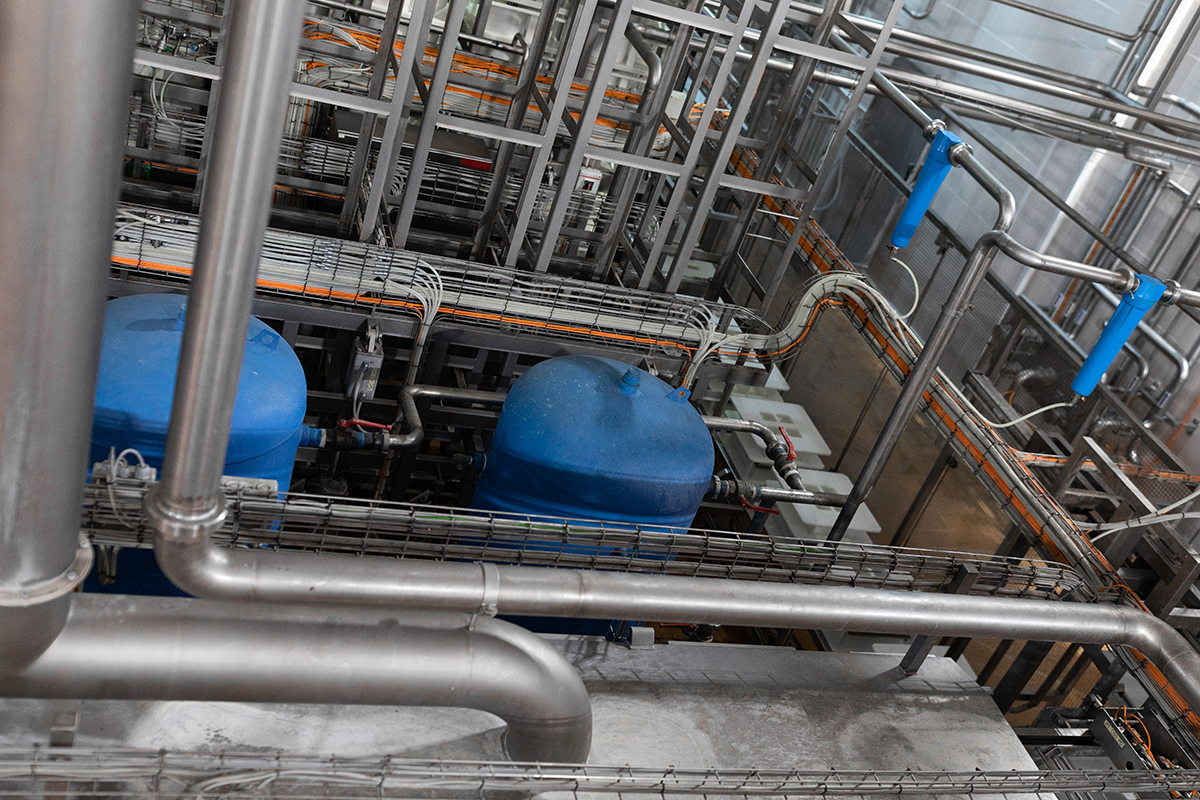
The food and beverage processing industry demands strict compliance with hygiene, safety, and durability standards. Materials used in piping systems must be non-toxic, corrosion-resistant, and capable of withstanding harsh cleaning protocols. High-Density Polyethylene (HDPE) has become a trusted solution in sanitary process environments for its unique performance advantages.
Why Piping Materials Matter in Food Processing
In food and beverage facilities, piping systems play a vital role in transporting potable water, ingredients, cleaning agents, and waste. Any contamination or structural failure within these systems can lead to safety violations, costly production delays, or product recalls. Therefore, the choice of piping material is critical to maintaining hygienic, regulatory-compliant operations.
HDPE piping offers clear advantages in sanitary environments. It is certified under NSF/ANSI 61 for use with drinking water and exhibits strong resistance to microbial buildup, which is essential in preventing biofilm contamination. Unlike stainless steel or PVC, HDPE provides a smooth, non-corrosive interior that helps sustain clean flow conditions while minimizing maintenance.
According to a 2021 study published in ScienceDirect, HDPE piping systems were found to outperform steel in preserving human health across their lifecycle. The material’s environmental safety and lower failure rate contribute to long-term reliability, especially in continuous-process industries such as food production.
Additionally, research from Asahi/America highlights that thermoplastic options like HDPE are widely adopted in food-grade applications for their lower weight, simplified installation, and resistance to aggressive cleaning chemicals used in CIP (clean-in-place) systems.
These advantages make HDPE a strong candidate for beverage facility piping upgrades or new sanitary installations, offering performance that aligns with modern food safety and operational goals.
Key Properties of HDPE in Sanitary Environments
HDPE is engineered to meet the strict sanitary requirements of food and beverage facilities, where material performance directly impacts product safety and system reliability. Its physical and chemical resistance properties make it a strong choice over conventional piping options.
- Chemical resistance: HDPE resists acids, caustics, and cleaning agents commonly used in sanitation procedures.
- Non-toxic: HDPE is certified as food-grade and does not leach chemicals into liquids it transports.
- Corrosion-free: Unlike steel, HDPE does not rust or degrade when exposed to moisture, making it ideal for wet environments.
- Durability: The material absorbs impact without cracking, reducing maintenance and downtime.
- Smooth interior surface: Reduces scale buildup and biofilm formation, helping maintain clean internal conditions.
Compliance with Food Safety Standards
HDPE sanitary piping used in food-grade applications must comply with a number of industry standards. These standards ensure materials are safe for contact with consumables and meet sanitation protocol requirements.
| Standard | Description |
| FDA 21 CFR 177.1520 | Approves HDPE for direct food contact under prescribed conditions |
| NSF/ANSI 61 | Ensures materials do not leach harmful contaminants into drinking water |
| 3-A Sanitary Standards | Specifies equipment requirements for dairy and food processing |
| ASTM F714 / D3035 | Governs dimensional and performance standards for pressure-rated HDPE pipes |
Applications in Food and Beverage Facilities
HDPE piping supports a broad range of fluid and gas handling needs within food and beverage plants. Its resistance to temperature fluctuations, chemicals, and pressure makes it a dependable choice for both core production processes and facility infrastructure.
- Ingredient transfer lines: For water, juice, syrup, or dairy liquids.
- Cleaning-in-place (CIP) systems: HDPE resists acidic and alkaline cleaning agents.
- Wastewater and effluent drainage: Smooth interior prevents buildup and clogging.
- Compressed air distribution: In beverage bottling or canning lines.
- Chilled water loops: For process cooling or HVAC integration.
Benefits of Food-Grade Poly Pipe in Processing Plants
Food-grade poly pipe offers a combination of hygiene compliance, installation ease, and lifecycle value. These advantages make it an efficient solution for sanitary processing environments where uptime and safety are priorities.
- Lightweight: Easier to install and reposition than metal alternatives.
- Thermally fused joints: Create leak-free, monolithic connections with no gaskets.
- Long lifecycle: Typical service life exceeds 50 years under normal operating conditions.
- Lower maintenance costs: No internal corrosion, flaking, or pipe replacement due to scaling.
- Flexible installation: Can be routed around equipment or structural obstacles.
How HDPE Sanitary Piping Supports Clean Design Principles
Hygienic design is a critical factor in modern food and beverage production. The use of HDPE piping supports clean-in-place system integration and helps minimize contamination risks.
Its seamless, gasket-free joints eliminate crevices where bacteria could hide. Furthermore, the system’s resistance to chemical cleaners allows consistent sanitation without material degradation. These features align with Good Manufacturing Practices (GMP) and Hazard Analysis Critical Control Points (HACCP) requirements.
Fusion Welding and Installation Efficiency
HDPE piping systems are connected using heat fusion, a process that bonds pipe segments into one continuous, unified system. Unlike mechanical joints that depend on fittings or couplings, fused HDPE connections are seamless and free from potential leak points while maintaining full pressure strength.
This method is highly suitable for sanitary applications where cleanliness and structural integrity are critical. It also enables faster, more reliable installation, particularly during new builds or facility upgrades where time and performance are key considerations. Professional fusion equipment ensures proper heat welding techniques for food-grade installations.
Comparing HDPE to Traditional Piping Materials
HDPE is increasingly being used as an alternative to traditional piping options. The table below outlines the core differences between HDPE and commonly used food facility piping materials.
| Feature | HDPE | Stainless Steel | PVC |
| Corrosion resistance | Excellent | Good | Moderate |
| Weight | Lightweight | Heavy | Lightweight |
| Joint sealing | Heat-fused | Welded or clamped | Solvent cement or mechanical |
| Sanitation durability | High | High | Low |
| Cost | Moderate | High | Low |
| Service life | 50+ years | 20–30 years | 10–20 years |
Supporting Sustainable Processing Goals
Many food and beverage companies are pursuing sustainability through improved water use, waste reduction, and lower energy consumption. HDPE piping contributes to these environmental goals by reducing water loss, preventing leaks, and maintaining system efficiency.
Because HDPE piping can be manufactured from recyclable resins and reused at the end of its life, it supports facility-wide green initiatives without sacrificing performance or compliance.
Maintenance and Inspection Considerations
Properly installed HDPE systems require minimal maintenance over their lifespan. However, routine inspection of joints and anchor points is still recommended, especially in high-temperature or chemically active process zones.
Thermal expansion allowances, pressure monitoring, and alignment checks ensure the system performs safely under variable production loads. These practices extend the usable life of food-grade poly pipe installations in beverage plants and food packaging plants.
Trusted Supply and Support from Coastal Resource Group
Food and beverage facilities across Texas rely on Coastal Resource Group for a dependable supply of HDPE sanitary piping systems and equipment. With operations in La Porte and Seguin, we are positioned to ship quickly to both industrial hubs and remote sites along the Gulf Coast and South Texas. We offer our clients:
- A wide inventory of HDPE pipe and food-grade poly pipe in various sizes and pressure ratings.
- Fusion machine rentals to support clean, leak-free installation in sanitary environments.
- 24/7 support for emergency orders and time-sensitive projects.
- On-call technicians to help match product specifications to your facility’s needs.
- Quick shipment and local availability to reduce downtime and keep operations moving.
Whether you’re outfitting a new beverage facility piping system or upgrading aging lines with food-safe solutions, our team is ready to help. Contact Coastal Resource Group today to request a quote and keep your operations running without delay.