
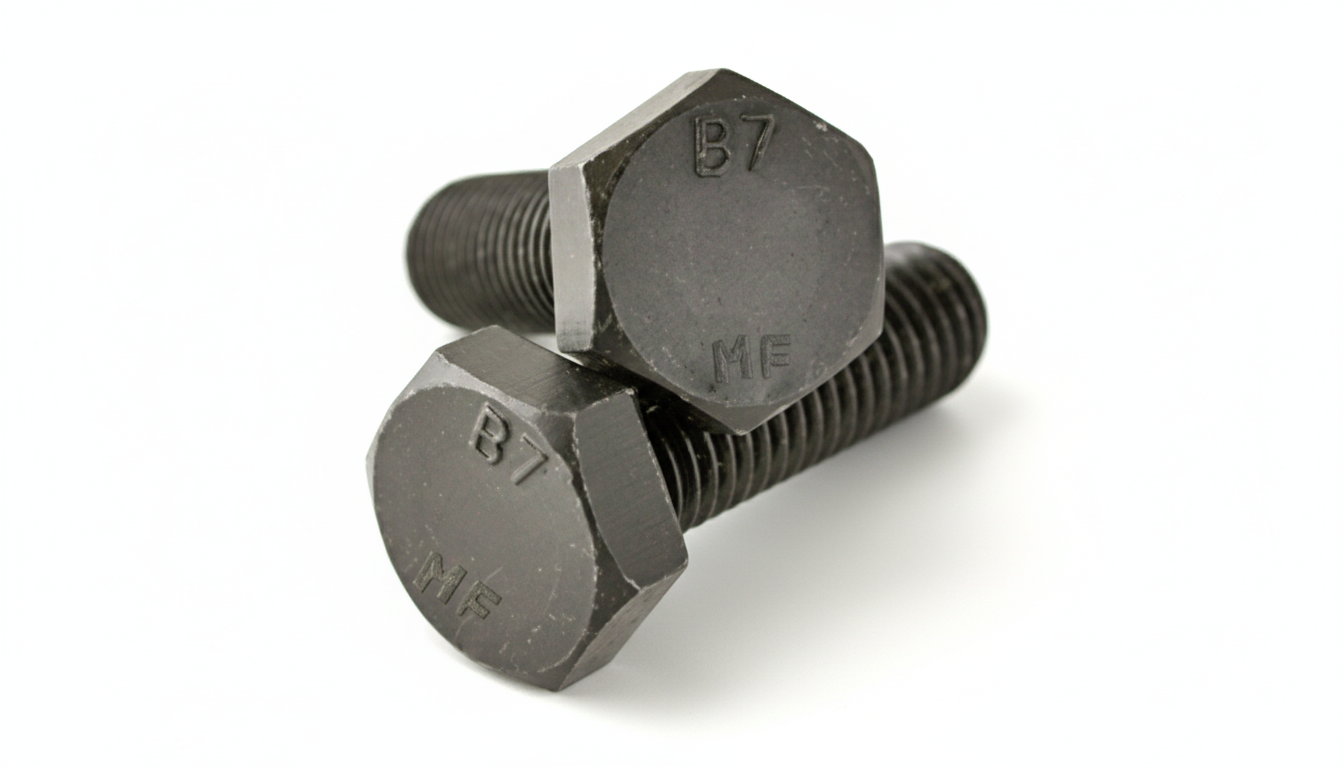
Within midstream natural gas operations, the integrity of every flange connection and pipeline joint depends on the reliability of its fasteners. Among the various grades available, B7 bolts have become the preferred option for their balance of strength, toughness, and temperature resistance. These characteristics make B7 bolts indispensable in high-pressure transmission systems, compressor stations, and processing facilities where safety and performance are critical to industrial operations.
The Role of Bolting Materials in Midstream Energy Infrastructure
Bolting materials are the backbone of industrial flanges and piping assemblies used throughout midstream networks. When gas moves from production fields to refineries, it passes through thousands of bolted joints that must maintain structural integrity under continuous stress and variable temperatures. The mechanical and chemical demands placed on these fasteners far exceed those in standard industrial systems.
B7 bolts, specified under ASTM A193, are designed from medium-carbon alloy steel that undergoes a heat-treatment process to improve tensile and yield strength. This makes them ideal for the pressurized environments of midstream pipelines and gas handling systems. Compared to ordinary carbon-steel bolts, they deliver superior resistance to stretching, thermal expansion, and hydrogen embrittlement, issues common in natural gas environments.
Material Properties That Define B7 Performance
According to the ASTM A193 B7 specification, these bolts are manufactured from chromium-molybdenum steel and tempered to achieve enhanced mechanical stability. Their composition ensures reliable clamping force in temperatures up to 900°F (482°C), a frequent requirement in gas transmission systems operating near compressors and dehydration units.
| Property | B7 Bolts | B8 Bolts | Standard Carbon Steel |
| Material Composition | Chromium-Molybdenum Steel | Austenitic Stainless Steel (304/316) | Medium Carbon Steel |
| Tensile Strength | 125 ksi minimum | 75 ksi minimum | 60 ksi average |
| Temperature Resistance | Up to 900°F | Up to 1500°F | Below 700°F |
| Corrosion Resistance | Moderate (when coated) | High | Low |
| Common Applications | Midstream Gas Transmission, Refineries | Chemical Processing, Marine Systems | General Fabrication |
This combination of tensile performance and moderate corrosion resistance explains why B7 remains the preferred material in gas compression and pipeline fittings rather than stainless alternatives, which can be more expensive or overly ductile for certain load conditions.
Advantages of Using B7 Bolts in Gas Transmission Systems
- High mechanical strength: B7 fasteners maintain bolt load even under fluctuating pipeline pressures, ensuring joint stability.
- Thermal durability: Their ability to perform at elevated temperatures prevents deformation around compressor stations.
- Cost efficiency: B7 provides strength comparable to stainless options at a fraction of the cost, optimizing maintenance budgets.
- Compatibility with coatings: Zinc, Teflon, or PTFE coatings improve corrosion resistance without reducing mechanical strength.
- Regulatory compliance: ASTM A193 compliance aligns with U.S. Department of Energy and OSHA safety requirements for pressure-containing assemblies.
These benefits make B7 bolts an integral part of gas transmission integrity programs where fastener failure can lead to costly downtime or environmental hazards.
Why B7 Outperforms Other Bolt Grades in Midstream Environments
Gas transmission bolts operate under unique conditions that combine vibration, high torque, and exposure to moisture or corrosive compounds. In these environments, B7 bolts have shown consistent performance compared to stainless or low-carbon alternatives. Their hardness and tensile capacity help prevent relaxation or creep, which can loosen flange assemblies over time.
When paired with proper flange and gasket compatibility, B7 fasteners create leak-free seals critical to methane containment and worker safety. The material’s moderate chromium content enhances its resistance to hydrogen sulfide (H₂S) and carbon dioxide (CO₂), both of which are commonly present in untreated natural gas streams.
Applications Across Midstream Natural Gas Operations
B7 bolts are used in nearly every stage of the midstream sector, particularly in applications involving high pressure or elevated temperatures.
- Compressor and pump skid assemblies
- Heat exchangers and separators
- Valve connections and header assemblies
- Storage terminals and pressure vessels
- Metering stations and gas dehydration systems
They are often paired with industrial flange bolts and precision-engineered gaskets to maintain alignment and sealing integrity throughout the system. For operations that demand extra corrosion resistance, coatings or plating treatments are commonly applied to meet field-specific requirements.
Heat Treatment and Quality Standards
ASTM A193 requires all B7 bolts to undergo quenching and tempering to achieve a consistent grain structure and uniform strength. The National Institute of Standards and Technology and ASTM oversee the parameters that ensure each batch meets mechanical specifications for tensile, yield, and hardness testing. This strict quality control provides assurance that B7 fasteners can endure the cyclic stresses of midstream pipeline operation.
Proper storage, handling, and installation are equally important. Bolts exposed to humidity without proper packaging may experience surface oxidation, which can lead to galling during torque application. Most operators follow recommendations similar to those published by the American Petroleum Institute (API) to maintain bolt integrity through inspection and torque verification schedules.
Ensuring Compatibility with Piping Materials
B7 bolts work well with a variety of flange and pipe materials used across midstream construction, including carbon-steel and alloy piping. In many installations, they are paired with carbon-steel components or 316 stainless-steel pipes where moderate corrosion resistance and structural reliability are required. Proper alignment between bolt grade, gasket material, and flange pressure rating ensures a long-lasting seal that withstands vibration and thermal cycling.
For systems using HDPE transition fittings or fusion joints, compatible hardware from HDPE pipe suppliers must be selected to maintain performance standards across dissimilar materials. This approach supports full mechanical integrity while reducing the risk of galvanic corrosion.
Partnering with Coastal Resource Group for Reliable Industrial Bolting Solutions
Coastal Resource Group provides high-performance bolting and industrial products that meet demanding midstream specifications. Their selection of industrial B7 bolts and flange bolt assemblies is designed to support reliable sealing under high-pressure conditions. Each product adheres to ASTM A193 standards and can be supplied with appropriate coatings, certifications, and documentation for project compliance.
- Comprehensive inventory of gas transmission bolts and fasteners
- Custom solutions through sourcing and specialty services
- Complementary components such as industrial welding supplies and safety products
- Convenient regional access via Houston and Seguin locations
For proven quality and dependable support across midstream operations, contact Coastal Resource Group today to source ASTM-compliant B7 bolts and explore a full range of industrial pipeline solutions.