
Choosing Pipe Materials for High-Temperature Industrial Service
A material that performs flawlessly at ambient temperature can fail well before its pressure rating suggests once heat enters the equation. Temperature does not just make a pipe hotter to the touch; it changes strength, chemical resistance, and long-term service life in ways that vary significantly by material family. Getting the material wrong on a high-temperature line rarely shows up at startup. It shows up months later as softening, permeation, or stress failure.
Why Temperature Changes the Rules for Every Material
Every pipe material has a published pressure rating tied to a specific reference temperature, typically 73°F. As operating temperature rises above that reference point, the allowable pressure rating drops, sometimes sharply. This derating curve is different for every material, which is why a pipe that comfortably handles a given pressure at ambient temperature may need to be upsized, uprated, or replaced with a different material entirely for the same pressure at 200°F or higher.
Carbon and Stainless Steel at Elevated Temperature
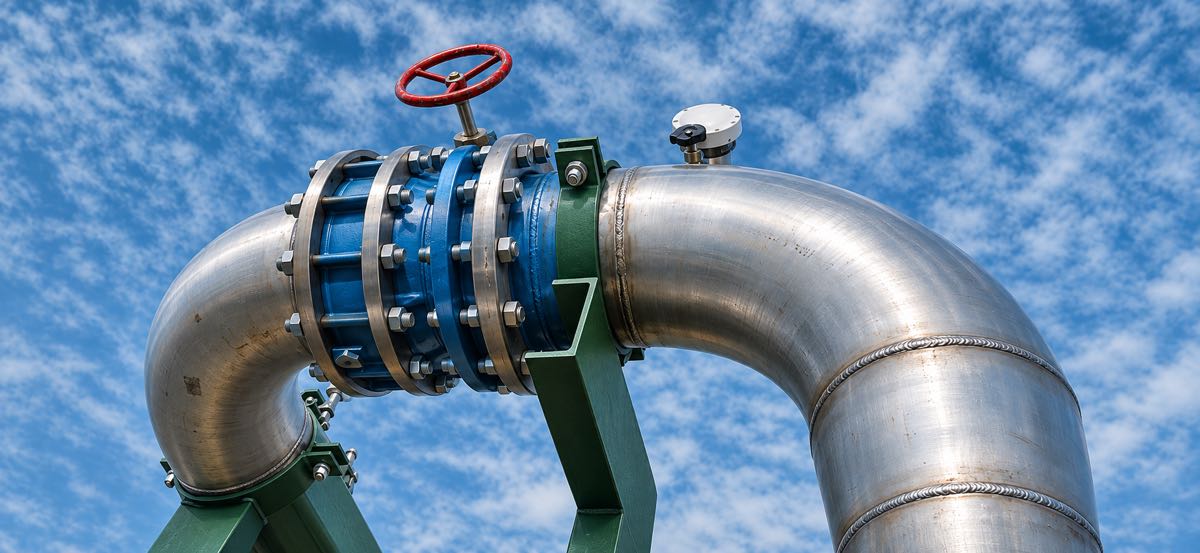
Steel pipe holds its mechanical strength across a wide temperature range better than thermoplastics, which is why it remains the default choice for high-temperature steam, hot oil, and many refinery process lines. Carbon steel and 316 stainless steel pipe are both suitable for many elevated temperature applications, though carbon steel requires attention to oxidation and scaling at sustained high heat. Stainless steel extends the usable temperature range further and adds corrosion resistance, which matters when the process fluid is both hot and chemically aggressive, though it comes at a materially higher cost per foot.
HDPE and the 140°F Ceiling
HDPE pipe’s chemical resistance and pressure ratings both decline as temperature rises, and published ratings for HDPE generally assume operation at or below 73°F, with performance narrowing meaningfully above 140°F. This does not rule HDPE out for warm service entirely, but it does mean HDPE is rarely the right specification for continuous high-temperature process piping. It remains an excellent choice for the water, wastewater, and produced water applications where operating temperature stays within its published range.
CPVC and PVDF for Hot Chemical Service
CPVC extends the usable temperature range beyond standard PVC, handling continuous service up to roughly 200°F depending on pressure and the specific formulation, which makes it a common choice for hot water and moderate-temperature chemical transfer where metal would require corrosion protection. Matching valves and fittings to the pipe material matters just as much as the pipe itself once temperature enters the picture. PVDF pushes the usable range further still and holds up to a broad set of aggressive chemicals at elevated temperature, though it carries a higher material cost than CPVC and is typically reserved for applications where both heat and chemical exposure rule out other plastics.
| Material | Approximate Continuous Temperature Limit | Chemical Resistance at High Temp | Typical High-Heat Use |
|---|---|---|---|
| Carbon steel | Several hundred °F, application dependent | Moderate, oxidation risk | Steam, hot oil, general process |
| Stainless steel | Several hundred °F, application dependent | High | Hot corrosive process fluids |
| HDPE | Up to about 140°F | Declines above 140°F | Water, wastewater, produced water |
| CPVC | Up to about 200°F | Good within range | Hot water, moderate chemical transfer |
Confirming Material Ratings Before Specifying
Published temperature and pressure derating tables vary by manufacturer and material grade, so the safest practice is confirming the actual derated pressure rating at the operating temperature rather than assuming the ambient-temperature rating applies. ASTM International maintains material and testing standards that define how these ratings are established across metal and thermoplastic pipe.
How Coastal Resource Group Helps You Match Material to Temperature
Specifying pipe for high-temperature service without checking the derated pressure rating is one of the more common and costly mistakes on an industrial project. Coastal Resource Group supplies steel, stainless, PVC, and CPVC pipe and can help confirm which material holds up at the operating temperature in question.
- 304 and 316 stainless steel pipe for hot, corrosive service
- PVC and CPVC pipe for moderate-temperature chemical transfer
- HDPE pipe across DR ratings for water and wastewater service within its temperature range
- 24/7 support for urgent material spec questions
A pipe rated correctly at ambient temperature can still fail at operating temperature if the derating was never checked. If you need help confirming the right material for your process temperature, request a quote from Coastal Resource Group or call 888-841-7954.