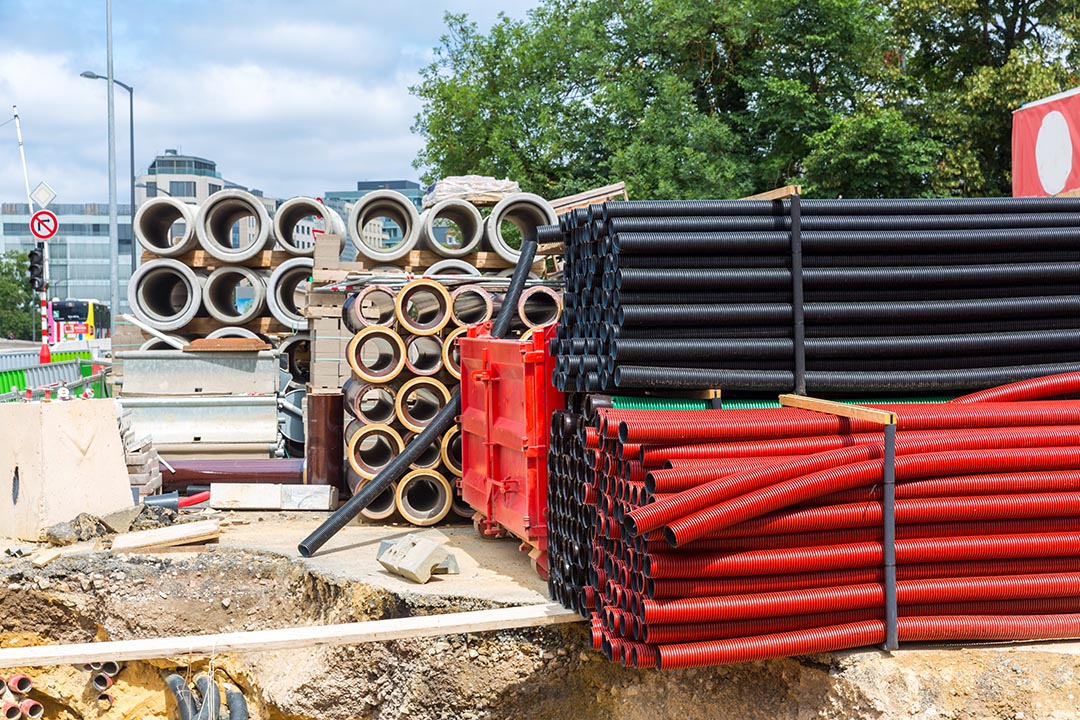
A pipe that arrives on site undamaged can still fail three weeks later because of how it sat in the yard. Handling, storage, and transport get treated as afterthoughts on a lot of jobsites, and that is usually where preventable damage to HDPE pipe actually happens.
Receiving Inspection Catches Problems Before They Compound
Checking a delivery against the packing list and inspecting for shipping damage before the truck leaves the site is the easiest opportunity to catch a problem while it is still someone else’s responsibility to fix. Once pipe gets unloaded, stacked, and mixed in with other material on site, tracing a defect back to shipping damage gets a lot harder.
A quick visual pass across bundles and coils for crushed sections, gouges, or out-of-round pipe takes a few minutes and can save a much longer conversation later about who is responsible for a joint that failed a pressure test. Any damage found at delivery should get documented and reported before the pipe goes into storage, not after it has already been staged for a job.
Unloading Sets the Tone for Everything After
Dragging pipe off a flatbed or dropping bundles from height introduces scrapes, gouges, and stress points before the pipe ever gets near a fusion machine. A relatively flat, level unloading area large enough for the delivery truck and handling equipment matters more than crews tend to give it credit for, since a cramped or uneven unloading site is where forklifts and pipe both end up damaged.
Palletized and silo-packed PE 4710 pipe should come off the truck from the side using a forklift rather than being dragged or pushed. Larger fabrications, manholes, and tanks need dedicated lifting points and should never be handled with chains or straps wrapped directly around the pipe wall, which can crush or deform it before installation even starts.
Stacking Height Is Not a Guess
Coiled HDPE pipe stacked too high on uneven ground puts crushing pressure on the bottom coils and can distort roundness enough to complicate fusion later. Industry guidance generally limits stack height to around five feet on a flat, level surface, dropping to about three feet where the surface is not perfectly level.
Straight lengths of pipe stack differently than coils and need blocking or dunnage underneath to keep the bottom layer off wet ground and away from point loading from uneven support. Skipping this step is a common reason pipe shows up at the fusion machine with a flat spot that was not there at delivery.
UV Exposure Is Rarely the Risk People Assume It Is
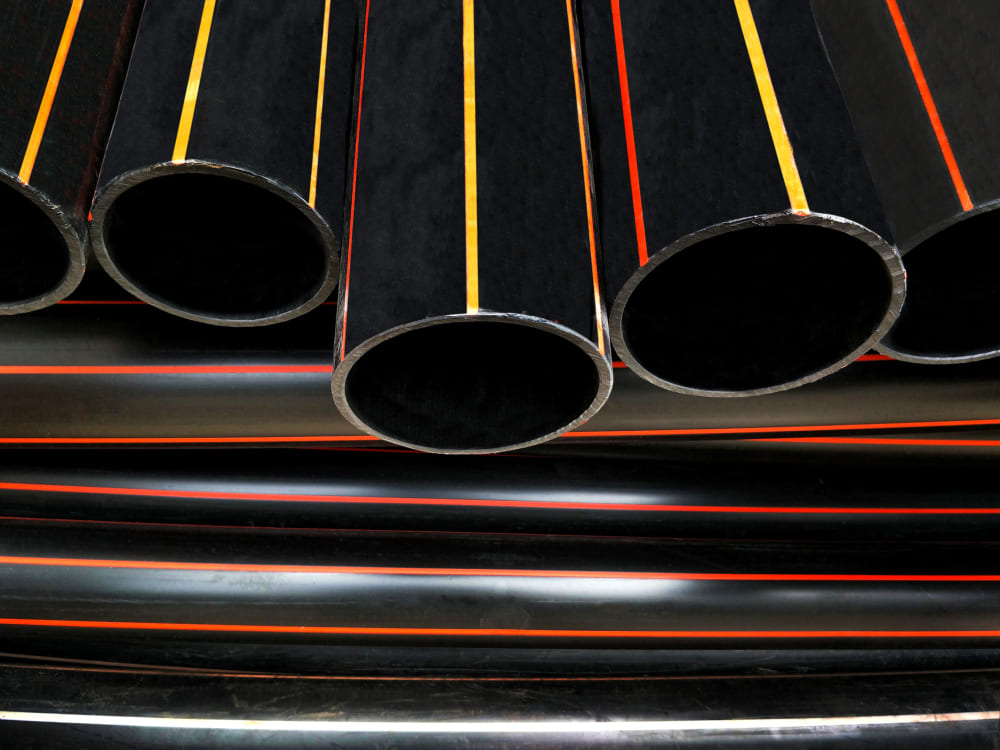
Black HDPE pipe contains carbon black, which is an effective UV stabilizer, and that is why black is the standard color specified for pipe that will sit outdoors before or during installation. According to the Plastics Pipe Institute’s guidance on storing PE pipe, black HDPE resists sunlight damage indefinitely, while non-black or colored HDPE products are generally limited to about two years of unprotected outdoor storage before UV effects become a concern.
That distinction matters for procurement teams sourcing tracer wire conduit or colored non-pressure pipe alongside standard black HDPE product lines. A stockpile of black pressure pipe sitting in a yard for a season is not the UV risk it looks like. A stack of colored conduit sitting exposed for two years past its delivery date is a different situation entirely, and that is the scenario where a project should plan for covered storage or prioritize using older stock first.
Cold Weather Handling Deserves Its Own Attention
Cold temperatures make HDPE pipe more susceptible to impact damage during handling, since the material stiffens as it gets colder. Pipe that would flex without issue on a warm day can crack if it is dropped or struck at freezing temperatures, which makes careful handling more important on cold mornings than on a mild afternoon.
Any pipe dropped or struck during cold weather handling should be inspected before it goes back into the stack or onto the truck for the next leg of transport. A section that looks fine on the outside can carry a hairline stress crack that only shows up once the pipe is pressurized in service.
Transport Adds Its Own Set of Risks
Pipe strung out along a right-of-way ahead of fusion needs support that keeps it off sharp rock, debris, or anything that could gouge the pipe wall while it sits waiting for the crew. Dragging pipe any meaningful distance across rough ground during stringing operations is one of the most common sources of surface damage that goes unnoticed until a fusion joint fails a pressure test.
Open pipe ends should be capped or plugged during transport and staging to keep dirt, water, and debris out of the bore. A contaminated pipe end that gets fused without proper cleaning is a weak joint waiting to happen, and it is a completely avoidable failure mode.
Checklist Before the Crew Starts Fusing
A few checks before pipe goes from the yard to the fusion machine catch most of the damage that would otherwise show up as a failed joint later:
- Confirm the delivery matches the packing list and document any shipping damage before the truck leaves
- Keep stack height within safe limits, lower on uneven ground than on flat, level surfaces
- Store colored or non-black HDPE product under cover if it will sit longer than a season
- Inspect any pipe dropped or struck during cold weather handling before it goes back into service
- Cap or plug open pipe ends during transport and staging to keep the bore clean
How Coastal Resource Group Supports Proper Handling on Site
Getting pipe from the truck to a clean fusion joint without introducing damage along the way comes down to following a handful of practices consistently, not treating handling as an afterthought. Coastal Resource Group supplies the full PE 4710 and PE 100 HDPE range alongside fusion equipment rentals, and our team can walk through unloading, stacking, and staging recommendations specific to your project before the delivery truck shows up.
If you have a delivery coming and want to confirm the right handling and storage plan for your jobsite, call 888-841-7954 or contact us ahead of the drop.