
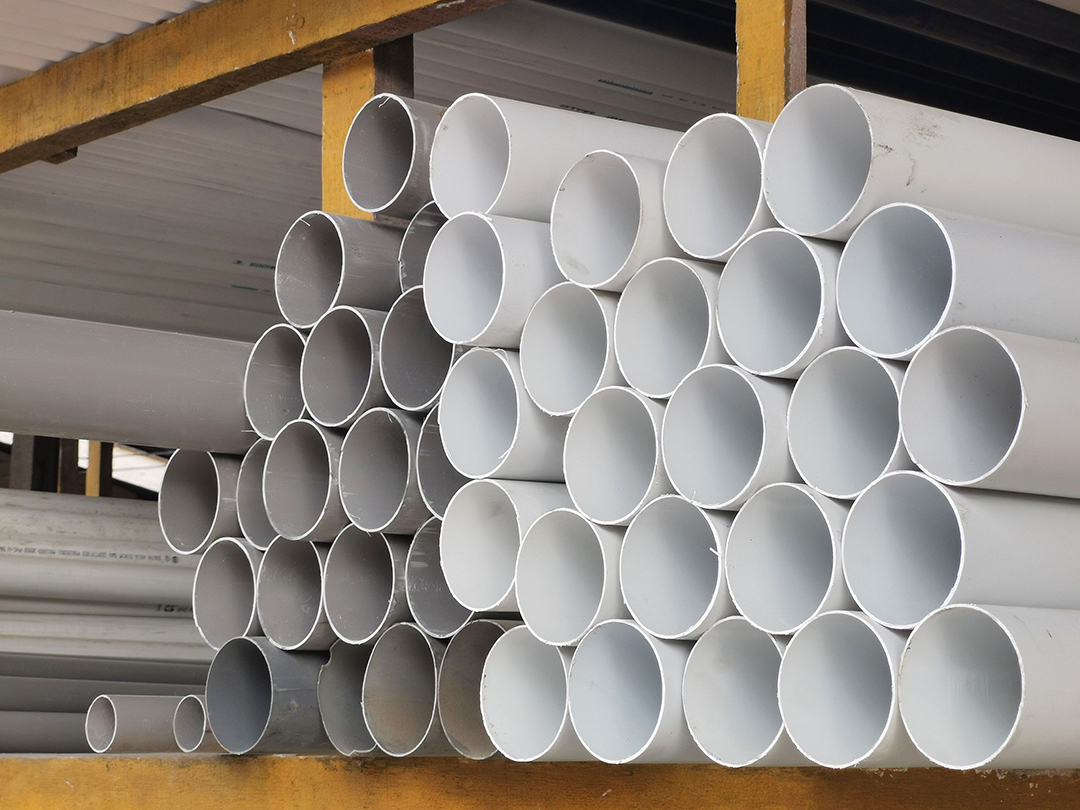
PVC and CPVC are not the same material. CPVC handles higher temperatures and a broader range of aggressive chemicals, making it the correct specification for most industrial chemical transfer applications. PVC is the right call where temperatures stay below 140°F and chemical exposure is mild. The wrong choice between them means re-piping the system.
The two materials look similar, install similarly, and serve overlapping applications, which is exactly why the specification decision gets made incorrectly. Procurement managers, plant engineers, and pipeline contractors need to know where the performance line falls before the material gets ordered.
The Core Difference Between PVC and CPVC
CPVC starts out as standard PVC and undergoes an additional chlorination process. That reaction raises the polymer’s chlorine content from roughly 56% to around 67%. The structural change significantly raises the material’s heat deflection temperature and broadens its range of chemical compatibility.
Both materials resist corrosion well. Both are lightweight and cost-effective compared to metal alternatives, and both are available in a wide range of diameters and pressure schedules. But their performance limits diverge meaningfully in industrial environments, and knowing where those limits fall determines which material belongs in the specification.
The Plastics Pipe Institute (PPI) is the major trade association for the plastic piping industry and publishes technical guidance on material selection, installation, and system design for both PVC and CPVC applications.
Temperature Ratings Side by Side
Temperature is where the gap between PVC and CPVC becomes hard to ignore. Standard PVC is rated for continuous service at approximately 140°F (60°C). Push a PVC system past that threshold, and the material softens, loses dimensional stability under pressure, and eventually fails.
CPVC handles continuous service up to approximately 200°F (93°C). That 60-degree advantage covers a wide range of industrial process conditions. Hot process water, heated chemical solutions, and transfer lines that see temperature spikes during production cycles are all environments where CPVC is the safer and more correct specification.
Beyond the continuous service rating, PVC is particularly vulnerable to short-duration temperature excursions in pressurized systems. A process line that regularly surges past 140°F can cause cumulative stress and premature failure even if average operating temperature stays within range. In production environments where temperature is variable or loosely controlled, specifying CPVC pipe instead of PVC is standard risk management.
Both materials also lose pressure rating as temperature increases. Published pressure ratings apply at 73°F. At elevated temperatures, rated pressure capacity drops along a derating curve that varies by manufacturer and pipe schedule. Engineers specifying plastic pipe for heated chemical service should pull those derating tables and confirm the pipe meets working pressure requirements at actual operating temperature, not at room conditions.
PVC vs CPVC at a Glance
Side-by-side comparison is the fastest way to resolve the PVC vs CPVC decision in a spec meeting, but the numbers only tell part of the story. The real value of understanding these differences is knowing which variable actually drives the decision for a given application. Temperature ceiling rules out one material or the other in most industrial scenarios. Chemical compatibility narrows it further. Pressure class and fitting system compatibility determine what the rest of the specification looks like once the material is selected.
The table below captures the key specification differences between PVC and CPVC across the variables that matter most in industrial material selection: temperature ceiling, chemical compatibility, pressure capacity, and system compatibility.
| Property | PVC | CPVC |
| Max Continuous Service Temp | ~140°F (60°C) | ~200°F (93°C) |
| Chlorine Content | ~56% | ~67% |
| Chemical Resistance | Good at ambient temps — acids, bases, salts | Broader — includes oxidizers and elevated-temperature service |
| Pressure Rating (Sch 40, 2″) | ~280 psi at 73°F | ~400 psi at 73°F |
| Available Schedules | Schedule 40, Schedule 80 | Schedule 40, Schedule 80, CTS |
| Solvent Cement | PVC cement only | CPVC cement only |
| Relative Material Cost | Lower | Roughly 2 to 3 times PVC |
| Typical Applications | Ambient-temp water, mild chemicals, drainage | Hot process lines, chemical transfer, corrosive systems |
Where CPVC Outperforms PVC on Chemical Resistance
Both PVC and CPVC resist a broad class of industrial chemicals at ambient temperatures, including most mineral acids, alkalis, and salts. Dilute hydrochloric acid, dilute sulfuric acid, sodium hydroxide solutions, and chlorinated water fall within acceptable operating parameters for both materials under normal conditions.
The advantage shifts to CPVC as temperature rises and when the system handles oxidizing agents. Sodium hypochlorite solutions, chlorine dioxide, and a range of strong acids that would degrade PVC at elevated temperatures fall within CPVC’s operating envelope. Industrial chemical processing facilities, water treatment plants, and petrochemical operations often run process lines at temperatures and chemical concentrations that exceed PVC’s reliable range. For those applications, CPVC is not a premium option — it is the correct one. For a broader look at piping material selection in Texas petrochemical and refinery environments, see CRG’s overview of petrochemical and refinery pipe supply in Texas.
Neither PVC nor CPVC should be specified for systems handling ketones, esters, aromatic hydrocarbons such as benzene or toluene, or concentrated chlorinated solvents. These chemical families attack both materials regardless of temperature. HDPE, PVDF, or specialty-lined pipe systems are typically the correct direction for those environments. Always verify against the manufacturer’s published chemical resistance guide using the actual chemical identity, concentration, and operating temperature before finalizing any plastic pipe specification.
When PVC Is the Correct Specification
PVC is not a fallback material. For a wide range of industrial applications, it is the right and cost-effective choice. Ambient-temperature chemical transfer lines handling mild acids, dilute caustics, or neutralized process water are well-suited to PVC. So are plant drainage systems, cooling water and service water lines, and low-pressure piping where operating conditions stay consistently below 140°F.
A common planning mistake is over-specifying CPVC in systems where the primary flow is a relatively inert carrier fluid or where chemical contact is minimal. A line transferring 2% acetic acid solution at ambient temperature is a well-supported PVC application. Paying the CPVC premium in that scenario adds cost without adding performance. The correct material decision depends on actual operating conditions, not worst-case assumptions.
CPVC typically runs two to three times the per-foot cost of comparable PVC pipe and fittings. On a large plant project, that gap adds up fast. Applications where PVC is typically the correct specification:
- Ambient-temperature transfer of dilute acids, dilute caustics, and salt solutions
- Chemical storage tank vent and drain lines at non-elevated temperatures
- Plant utilities including cooling water and service water lines
- Irrigation and water distribution at industrial facilities
- Low-pressure drainage and collection systems
Fittings, Cement, and System Compatibility
One of the most common installation errors in PVC and CPVC systems is mixing solvent cements. PVC cement and CPVC cement are chemically different products and are not interchangeable. Using PVC cement on a CPVC joint can produce a bond that appears solid at installation and fails under temperature load or pressure cycling. The correct cement must match the pipe material on every installation, not just the first.
The same rule applies to fittings. PVC fittings should not be combined with CPVC pipe in a pressure system, and vice versa. The two materials have different thermal expansion rates, and mixed-material joints can loosen over time in systems that cycle through temperature variations. The material must stay consistent from pipe through fitting through valve.
CPVC is also available in CTS (Copper Tube Size) dimensions in addition to the standard IPS (Iron Pipe Size) Schedule 40 and Schedule 80 familiar to most PVC buyers. CTS and IPS dimensions are not compatible at the fitting level. Confirming the correct dimensional standard before ordering fittings and valves prevents costly field mismatches.
Flanged connections in PVC and CPVC systems require attention to gasket material compatibility. Some gasket compounds and sealants contain plasticizers that can migrate into rigid vinyl over time, causing stress cracking under pressure. Only gasket and sealant materials confirmed compatible with the piping material being installed should be used. CRG stocks industrial flanges and flange hardware across a range of configurations for thermoplastic piping systems.
PVC and CPVC Pipe Supply in Texas from Coastal Resource Group
Coastal Resource Group stocks both PVC and CPVC pipe and fittings for industrial, chemical, and commercial applications across Texas. Whether the project calls for ambient-temperature PVC utility piping or CPVC spec’d for an aggressive chemical transfer line, CRG supplies the material from two Texas locations with same-day availability on stocked items and 24/7 emergency delivery when the schedule cannot wait.
Related resources for piping material selection and supply in Texas:
- PVC and CPVC pipe and fittings stocked at CRG
- Petrochemical and refinery pipe supply in Texas
- Industrial flanges and flange hardware
- Industrial supply services at Coastal Resource Group
If your project needs PVC or CPVC pipe, fittings, and compatible hardware from a single Texas source, Coastal Resource Group stocks a full range and delivers across Texas. Call 888-841-7954 or request a quote to get started.