Pipelines rely on sealed connections to control pressure, contain fluids, and prevent environmental release. Among the most stressed connection points are flanges and gaskets, which are repeatedly exposed to temperature change, vibration, internal pressure, and chemical interaction. When these components degrade, leaks and system interruptions are often the result. Consistent maintenance practices allow these connection points to remain stable throughout the service life of a pipeline system.
Long term pipeline integrity is supported through inspection discipline, correct installation methods, and material selection aligned with operating conditions. When flange faces and gasket materials are managed properly, system reliability is preserved, and unplanned shutdown risk is reduced.
Role Of Flanges And Gaskets Within Pipeline Systems
Flanges serve as mechanical joints that allow pipeline sections, valves, and equipment to be assembled and disassembled. Gaskets are installed between flange faces to create a pressure-tight seal once bolting force is applied. This joint design allows access during maintenance while maintaining containment during operation.
Sealing performance depends on several variables. Bolt load distribution, flange surface finish, gasket compressibility, and operating pressure all interact at the joint. When any element is misaligned or degraded, sealing stress becomes uneven, increasing the likelihood of leakage.
Because flange joints are static seals rather than welded connections, routine attention is required to maintain sealing integrity over time.
Common Degradation Factors Affecting Flange Joints
Flange and gasket assemblies are exposed to conditions that gradually reduce performance. Thermal cycling causes expansion and contraction that can relax bolt tension. Chemical exposure may attack gasket binders or elastomers. Mechanical vibration can promote bolt loosening and flange rotation. These conditions often result in:
- Temperature fluctuation leading to bolt load loss
- Chemical incompatibility with gasket materials
- Surface corrosion on flange faces
- Improper bolt torque during installation
- Pipeline movement from pressure changes
These factors often work together. When bolt tension is reduced, gasket compression drops, and sealing stress falls below the minimum required threshold.
Gasket Inspection Methods And Evaluation Criteria
Routine gasket inspection supports early detection of sealing degradation. Inspection activities should be scheduled during planned outages or system access windows. Visual indicators such as extrusion, cracking, or compression set can reveal declining gasket performance.
During gasket inspection, flange faces should also be examined. Surface pitting, scratches, and corrosion can prevent proper gasket seating even when new materials are installed.
| Inspection Area | Observed Condition | Maintenance Action |
| Gasket Body | Hardening or cracking | Replace gasket |
| Flange Face | Pitting or scoring | Resurface or repair |
| Bolting | Thread damage or corrosion | Replace bolts |
Consistent gasket inspection reduces reliance on reactive repairs and allows corrective action before leakage develops.
Flange Service Tips to Improve Seal Stability
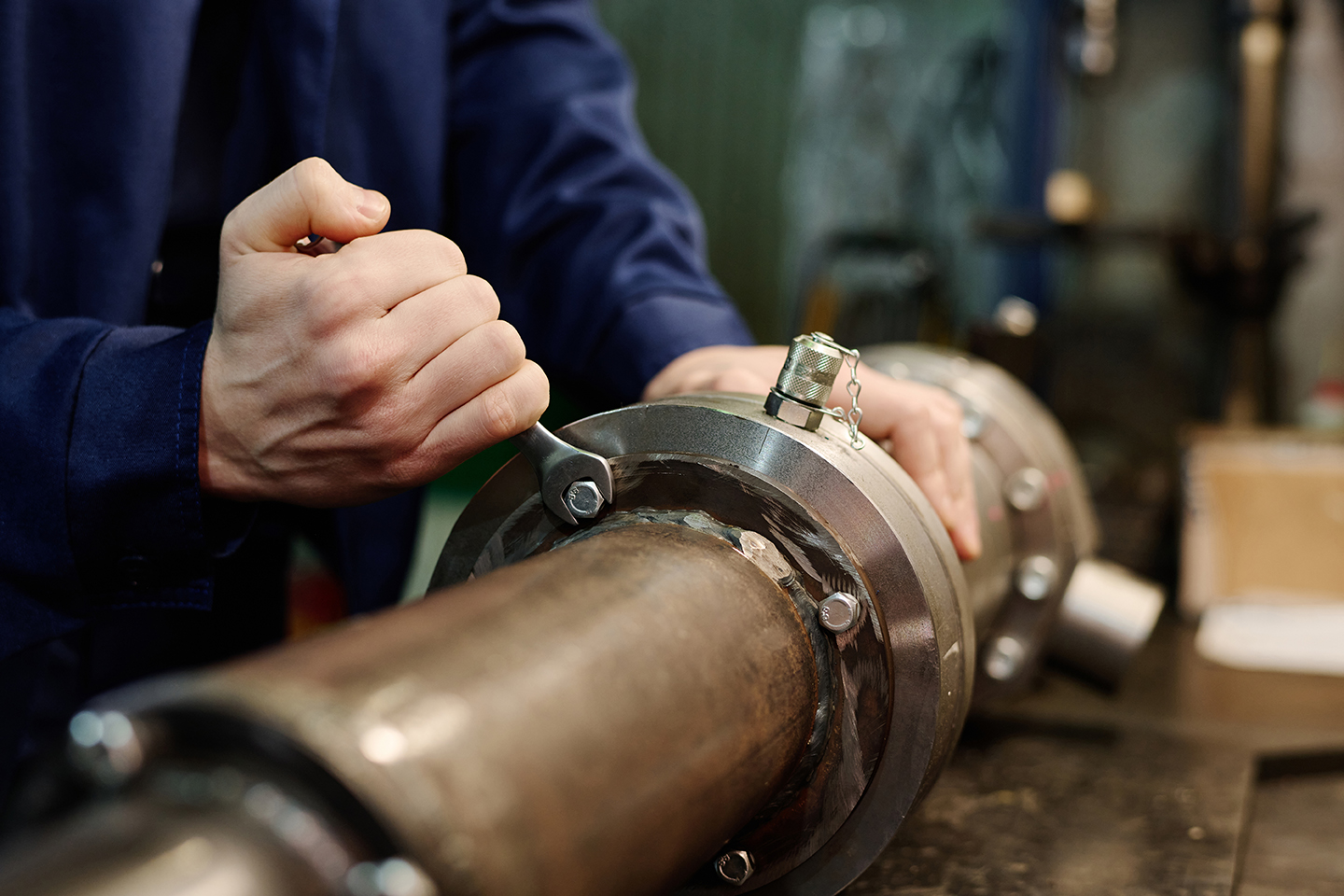
Effective flange service focuses on installation accuracy and load control. Gasket seating stress must be evenly distributed across the flange surface. This outcome is influenced by bolt tightening sequence, torque control method, and flange alignment.
Bolting should be tightened in a cross pattern using calibrated tools. Multi-pass tightening allows gradual load distribution and reduces the risk of gasket damage. Flange alignment standards should be verified before bolt installation to prevent uneven stress. Follow these tips to ensure proper gasket sealing:
- Use calibrated torque or tensioning equipment
- Apply cross-pattern tightening sequences
- Verify flange parallelism before tightening
- Clean flange faces before gasket placement
Following these practices improves joint repeatability and reduces the frequency of rework. More detailed guidance on bolt torque procedures is covered in proper bolt installation methods.
Material Selection And Industrial Seal Longevity
Industrial seal longevity is influenced heavily by gasket material compatibility. Materials must be selected based on operating pressure, temperature range, and chemical exposure. When material limits are exceeded, accelerated aging and seal failure are commonly observed.
Common gasket materials include compressed fiber, spiral wound metal, PTFE, and elastomer-based products. Each material offers specific performance characteristics. Selection errors often lead to premature sealing degradation.
Industrial seal longevity improves when materials are matched to service conditions rather than cost alone. Guidance on industrial leak prevention and sealing compliance outlines how material performance directly impacts environmental and operational outcomes. Long-term performance typically offsets higher initial material expense.
Maintenance Scheduling And Documentation Practices
Predictable maintenance outcomes are supported by structured scheduling and documentation. Flange joints should be logged during installation, including gasket type, bolt torque values, and installation date. This information supports trend analysis and maintenance planning.
Inspection intervals may be adjusted based on service severity and historical performance. High temperature or corrosive services often require more frequent review. Process safety management requirements reinforce the importance of maintaining accurate records for pressurized piping systems.
Documented maintenance practices reduce knowledge gaps and support consistent sealing performance across pipeline assets.
Operational Impact Of Proper Joint Maintenance
Well-maintained flange joints contribute directly to system availability and safety. Leakage events often result in unplanned shutdowns, environmental exposure, and repair costs. These risks are reduced when joint maintenance is approached systematically.
Stable joints also support pressure control and flow efficiency. When sealing stress is maintained, operating parameters remain predictable, and equipment stress is minimized.
Over time, disciplined maintenance practices strengthen overall pipeline integrity and operational reliability. A broader look at long-term flange and gasket performance illustrates how systematic care translates into measurable uptime gains.
Pipeline Support Services From Coastal Resource Group
Pipeline operators rely on consistent sealing performance to manage safety, uptime, and compliance. Targeted support services help ensure flange joints and gasket systems remain stable throughout changing operating conditions and service demands.
- Gasket evaluation aligned with pressure, temperature, and media exposure
- Flange maintenance planning based on service severity and inspection data
- Sealing system guidance supporting long-term asset performance
- Material selection recommendations focused on industrial seal longevity
Coastal Resource Group applies proven inspection methods and practical flange service strategies to support pipeline integrity while helping reduce downtime and leak risk. Contact us to discuss sealing system needs and maintenance planning tailored to your pipeline operations.