
If you are working with HDPE pipe in the field, the question of which fusion method to use comes up on nearly every job. Socket fusion and butt fusion both produce permanent, leak-free thermoplastic joints, but they are not interchangeable. Pipe diameter, available equipment, and job site conditions all push toward one method or the other, and using the wrong one creates problems that show up during pressure testing.
Here is how to read those factors and make the right call before work starts.
How Each Fusion Method Works
Socket fusion joins pipe to a fitting by heating the outside of the pipe end and the inside of the fitting socket simultaneously, then pressing them together and holding until the joint cools. The fitting does the mechanical work of aligning the joint. No machine is required beyond the fusion iron and the correct size insert tool. It is a straightforward process on small-diameter pipe and can be done with minimal setup in tight spaces.
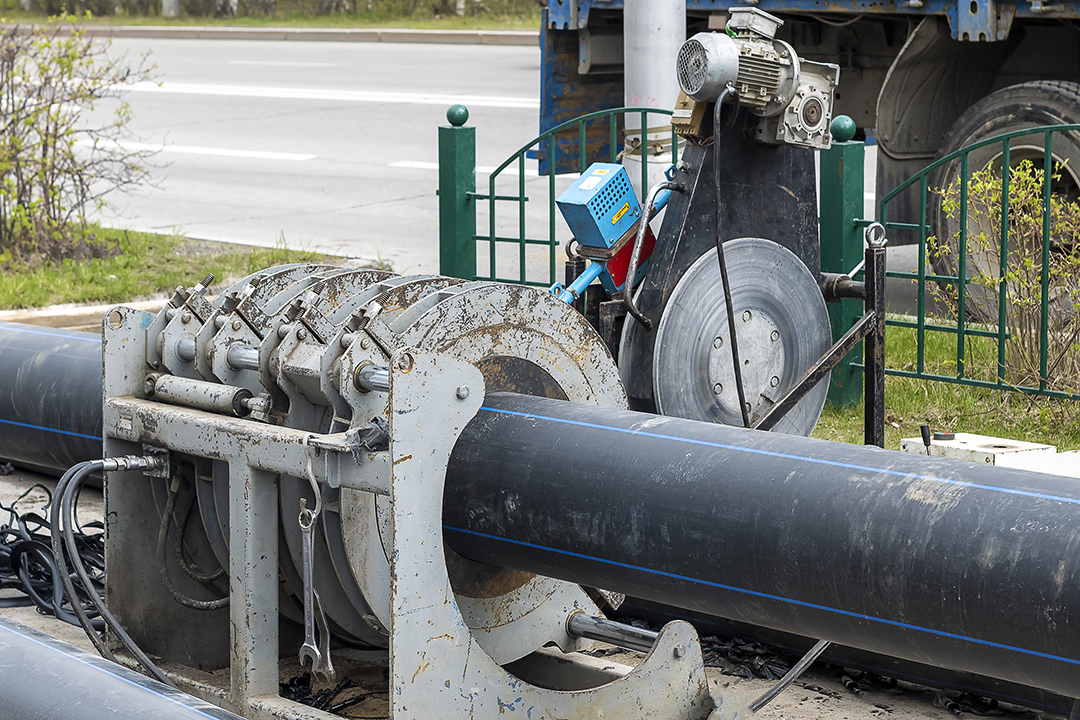
Butt fusion joins two pipe ends directly, without a fitting, using a machine that faces both ends flat, heats them against a heater plate under controlled pressure, and then presses them together as the plate is removed. The result is a full-diameter joint with a bead ring visible on the outside. McElroy Manufacturing, the industry standard for HDPE butt fusion equipment, produces machines that range from compact units for ditch work to track-driven machines capable of fusing pipe up to 63 inches OD. The process requires more equipment and setup time than socket fusion but produces a joint that often tests stronger than the pipe itself.
Pipe Size Is the First Decision Point
The most reliable way to start the socket vs butt decision is with pipe diameter. Socket fusion is designed for small-diameter pipe. Most socket fitting manufacturers produce tooling for pipe up to 3 inches IPS or CTS. Butt fusion covers the full range from 2 inches up through large-diameter mainline pipe.
The 2-inch to 3-inch range is where overlap exists and where the decision requires more thought. For pressure systems in that size range, butt fusion is generally preferred because it eliminates the fitting as a potential failure point and keeps the joint consistent with the rest of the mainline. For service connections, branch lines, or low-pressure systems in that size range, socket fusion is fast and practical.
| Factor | Socket Fusion | Butt Fusion |
|---|---|---|
| Typical pipe size range | 1/2″ to 3″ IPS/CTS | 2″ to 63″ OD |
| Equipment required | Fusion iron with socket and spigot inserts | Butt fusion machine (facer, heater plate, hydraulic carriage) |
| Applicable ASTM standard | ASTM D2657 | ASTM F2620 |
| Fitting required | Yes (socket fittings: tees, elbows, couplings) | No for pipe-to-pipe joins; butt fusion fittings for elbows and tees |
| Joint bead | Hidden inside socket fitting | External bead visible on both sides of the joint |
| Typical applications | Service laterals, small-diameter branch lines, low-pressure systems | Mainline HDPE, gathering systems, municipal water mains, oilfield flowlines |
Field Conditions That Shift the Decision
Pipe size gets you most of the way there, but field conditions can change what is practical. Socket fusion requires two-handed access around the full circumference of the fitting and pipe end. In a narrow ditch, confined mechanical room, or tight bend, that space may not exist. Butt fusion machines are designed for in-ditch use, and smaller units like compact hydraulic carriages can operate in spaces where a full rolling machine would not fit.
Temperature is another variable. Both methods require the pipe and fitting or pipe ends to reach the correct fusion temperature before joining, and both require the joint to be held undisturbed during cooling. In cold weather, achieving and maintaining that temperature is harder. Socket fusion irons lose heat faster than the large heater plates used in butt fusion, which makes consistent results more difficult to achieve on cold mornings in the field. If your crew is fusing in sub-40°F conditions, butt fusion with proper heater plate temperature management is more reliable.
Wind matters too. A fusion iron sitting exposed on a windy job site loses temperature quickly between joints. Covering the iron between uses and allowing for longer heat times in cold or windy conditions applies to both methods, but it is a more common point of failure on socket fusion jobs where the crew is moving fast through multiple small connections.
Joint Strength and Pressure Ratings
A correctly performed butt fusion joint on DR11 HDPE pipe will typically test at or above the pressure rating of the pipe itself. The joint zone becomes the same material as the pipe wall, fused into a continuous structure with no mechanical fasteners or adhesives. That is the reason butt fusion is the default method for mainline HDPE construction in oilfield gathering, municipal water, and wastewater infrastructure.
Socket fusion joints, when performed correctly, are also pressure-rated and permanent. The difference is that a socket fusion joint introduces a fitting into the system. The fitting is an additional component with its own tolerances and heat absorption characteristics. On a well-run job with experienced crew, socket fusion produces reliable joints. On a rushed or poorly supervised job, missed heat times and incomplete seating of the pipe into the socket are common failure modes that are nearly impossible to detect visually before the system is pressurized.
For DR17 pipe on low-pressure drainage or gravity flow applications, either method is appropriate at the correct diameter. For high-pressure oilfield flowlines, produced water lines, or any system that will be hydrotested, butt fusion is the right choice on anything above 3 inches, and often below it.
Equipment and What It Means for Project Planning
Socket fusion irons are relatively inexpensive and portable. A crew working on a small-diameter gas service or residential water system can carry everything they need in a van. There is no staging or rigging involved.
Butt fusion requires a machine, and the right machine depends on the pipe diameter and job site access. A rolling machine handles most mid-range commercial and oilfield work. A TracStar or similar self-propelled unit is used for long-run mainline construction where the crew is moving along a pipe string. For in-ditch work on larger pipe, the machine’s carriage is often removed and lowered into the ditch separately.
CRG rents McElroy butt fusion equipment across Texas, covering machines from compact units for 2-inch to 12-inch pipe up to larger rolling machines for mainline work. If your project calls for butt fusion and you do not own the equipment, rental is typically more practical than purchasing for a single job. Fusion machine rental through CRG includes the machine matched to your pipe diameter so you are not arriving on site with a unit sized for the wrong range.
When Texas Contractors Use Both Methods on the Same Job
It is common on oilfield and municipal pipeline jobs to see both methods on the same project. The mainline is butt fused. Service connections, instrument taps, and small-diameter branch laterals are socket fused. The decision is made by what the pipe is doing, not by a preference for one method over the other.
A gathering system contractor in the Permian Basin running 8-inch DR11 from the pad to the header will butt fuse every joint on the mainline and socket fuse the 2-inch chemical injection ports branching off it. The two methods coexist because they serve different roles within the same system.
Planning that split in advance, before equipment is ordered, is where the time and cost savings happen. Arriving on site with a butt fusion machine when the job requires socket fusion fittings, or showing up without a fusion machine for a 6-inch mainline job, creates the kind of delay that is entirely avoidable.
Sourcing Pipe and Fusion Equipment from One Texas Supplier
Getting the pipe, fittings, and fusion equipment from the same source simplifies coordination and reduces the risk of a diameter or DR mismatch between what is on the truck and what the machine is set up to fuse.
Coastal Resource Group supplies HDPE pipe across the full DR range alongside McElroy fusion machine rentals from two Texas locations. Whether your project needs a butt fusion machine for mainline work or socket fittings for branch connections, the supply and equipment can move together. Related resources:
- Fusion Machine Rental
- McElroy Fusion Rental Texas
- Fusion Machine Rental Houston
- HDPE DR11 Pipe
- HDPE DR17 Pipe
If your project requires HDPE pipe and fusion equipment matched to the same diameter and DR rating, Coastal Resource Group can confirm availability and coordinate delivery across Texas. Call 888-841-7954 or request a quote to get started.